Seasonal Guide
Reviving a Drought-Stressed Lawn After an Indiana Summer
By Speedway Lawn Maintenance, LLC 5 min read
The short answer
To revive a drought-stressed lawn in Indiana, first confirm the grass is dormant rather than dead with a tug test. Stop fertilizing, weed spraying and mowing while it is brown, and give it about half an inch of water every two to three weeks. Then core aerate, overseed and feed between mid-August and September.
Most central Indiana summers bring at least one stretch of two or three weeks with little rain and highs near 90°F. Kentucky bluegrass and tall fescue respond by shutting down and turning tan. That looks alarming, but the ability to revive a drought-stressed lawn depends almost entirely on what you do, and avoid doing, during and right after that dry spell.
The good news: cool-season grass is built to go dormant. The crowns (the growing points at the soil line) can survive several weeks without much water. The bad news: a few common mistakes, like heavy fertilizer in July or weed spray on stressed turf, can turn a dormant lawn into a dead one.
Dormant or Dead? Three Checks That Answer It
Before planning any recovery, figure out what you are dealing with. These are the checks we run on the first visit.
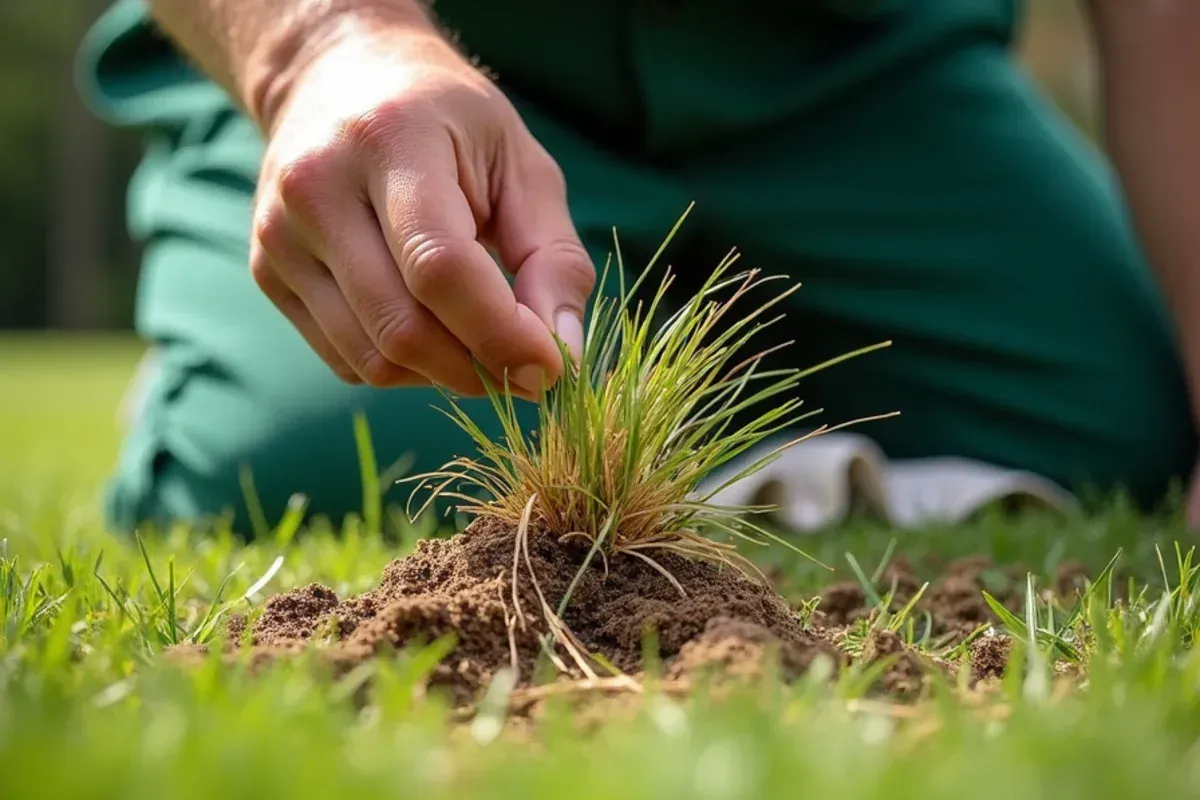
- The tug test: grab a handful of brown grass and pull gently. Dormant grass resists and stays anchored. Dead grass pulls out easily with little or no root.
- The crown check: split a plant at the soil line. A firm, whitish or light-tan crown is alive. A brown, mushy or dry-crumbly crown is not.
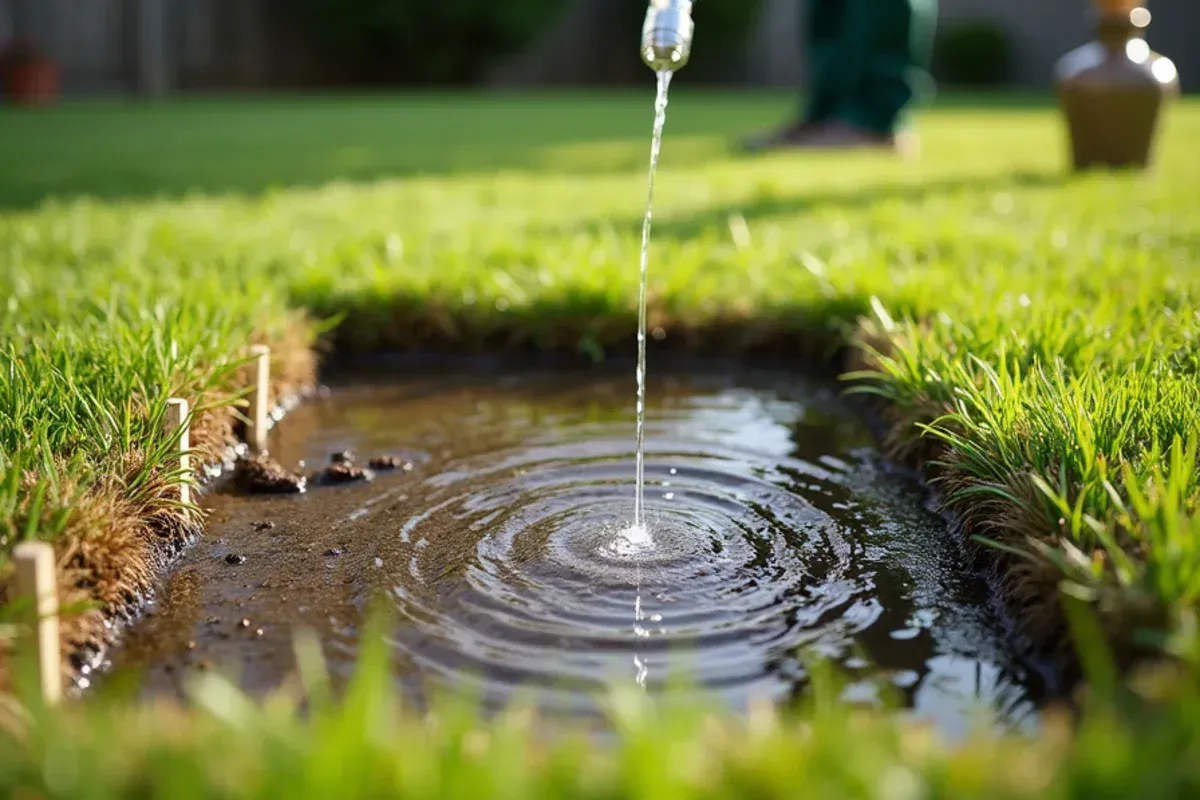
- The water test: soak a small patch with about half an inch of water for a few days. Dormant turf shows green shoots within one to two weeks.
| What you see | Likely cause | Next step |
|---|---|---|
| Evenly tan lawn, firm when tugged | Drought dormancy | Maintenance watering; wait for rain |
| Brown patches that lift like carpet | White grubs | Count grubs under the turf |
| Brown along driveways and walks | Heat from pavement | Extra water; reseed edges in fall |
| Footprints stay pressed in the grass | Wilt, before dormancy | Water deeply today |
| Irregular brown rings in humid weather | Brown patch or other disease | Water early morning only; ask a pro |
If patches peel back easily, check for grubs before blaming drought. Our guide to grub control in Indiana covers the peel test.

What to Stop Doing During a Drought
Most drought damage we see is made worse by good intentions. Hold off on these until temperatures break and the lawn greens up.
- Fertilizing. Nitrogen pushes top growth the roots cannot support. Purdue specifically advises against feeding cool-season turf in high heat.
- Broadleaf weed sprays. Herbicides injure stressed grass and work poorly on drought-hardened weeds. Save them for fall.
- Mowing dormant grass. It is not growing, and mower wheels crush dry crowns. Skip visits until new growth appears.
- Heavy traffic. Parking, play sets and dog paths on dormant turf leave bare trails that last into fall.
- Short, frequent watering. A nightly five-minute sprinkle keeps roots shallow and invites disease.
Watering Strategy: Commit or Let It Rest
You have two reasonable choices. Switching back and forth between them is the one wrong choice, because every green-up and dormancy cycle burns the plant’s stored energy.
Option 1: Keep it green
Supply about 1 to 1.25 inches of water per week, rain included, in one or two deep early-morning soakings. On central Indiana clay, water soaks in slowly, so run cycles of 15–20 minutes with a break between to prevent runoff. A tuna can on the lawn makes an easy rain gauge.
Option 2: Let it go dormant
Stop regular watering, but give the lawn about half an inch every two to three weeks. That will not green it up; it keeps crowns hydrated enough to survive. Most healthy bluegrass and tall fescue lawns can ride out four to six weeks of dormancy this way.
The Fall Recovery Plan
Real recovery happens from late August into October, when nights cool off and cool-season grass starts growing roots again. This is where a structured drought rescue program pays off.
- Wait for green-up. After steady rain or cooler weather returns, give the lawn two weeks to show what survived.
- Core aerate. Pulling plugs with core aeration and overseeding relieves the compaction that summer foot traffic leaves in dry clay and gets water and seed into the soil. Moist soil pulls far better cores than baked soil.
- Overseed thin areas between August 15 and September 15. That is Purdue’s primary window. Turf-type tall fescue blends handle future droughts best thanks to deeper roots.
- Feed in September. A fertilizer application in early fall helps surviving grass thicken and new seedlings establish. A second fall feeding builds root reserves for next summer.
- Keep seed moist with light daily watering for the first two to three weeks, then taper to deeper, less frequent soakings.
A well-timed lawn fertilization program matters here: the right fall feedings do more for drought recovery than any amount of summer nitrogen.
Building a Lawn That Handles the Next Dry Spell
Drought tolerance is mostly root depth. Mowing at 3–4 inches, aerating clay every fall, and watering deeply rather than often all push roots down. Riverside and newer subdivision lots, like many we see around lawn care in Noblesville, often sit on thin topsoil over compacted fill, and those lawns benefit most from annual aeration and a gradual shift toward tall fescue.
From our crew's experience
What We Look For on a Late-Summer Drought Visit
Most brown lawns we walk in August are not drought-killed. They are drought-exposed: the dry spell revealed a problem that was already there. The strips that die first usually sit over buried construction debris, along south-facing driveways, or on compacted builder fill where roots never got past the top two inches. Seeding those spots without fixing the cause just grows a nicer patch that browns again next July.
Tradeoffs we weigh before recommending anything:
- Seed now or wait. If most of the turf in an area is gone, we overseed in the fall window. If it is thin but alive, fall feeding and aeration may be enough on their own.
- Grubs versus drought. Both leave brown turf in August. We peel back the edge of every dead patch before calling it drought, because grub damage needs a treatment, not a sprinkler.
- Irrigation versus rest. On a lawn we mow weekly, we would rather see it stay dormant than swing between green and brown three times in one summer.
Riding out a normal dry spell is a fine DIY job. Call for a second opinion when the tug test fails across large areas, when brown patches lift like carpet, or when the same spots die every summer, because that pattern points to soil rather than weather.
FAQ
Common Questions
How long can an Indiana lawn stay dormant without dying?
Healthy Kentucky bluegrass and tall fescue lawns typically survive four to six weeks of dormancy, especially if they get about half an inch of water every two to three weeks. Lawns that were thin, grub-damaged or recently seeded going into summer have less in reserve and can start losing crowns sooner.
Should I fertilize my lawn to help it recover from drought?
Not during the heat. Wait until the lawn greens up and daytime highs settle below the mid-80s, usually late August or September in central Indiana. Then a fall feeding helps the grass thicken and store energy. Fertilizer applied to dormant or heat-stressed turf can burn it or push weak growth.
When should I reseed dead patches after a drought?
Mid-August through mid-September is the best window in central Indiana. Soil is still warm enough for fast germination, air temperatures are dropping, and seedlings have a long fall to establish before winter. Pair seeding with core aeration for much better seed-to-soil contact on clay.
Will a brown lawn come back on its own after rain?
Usually, if it was dormant. Healthy bluegrass and tall fescue green up within one to three weeks of steady rain and cooler nights. Areas still brown after that have likely lost their crowns and need overseeding in the fall window. Perennial ryegrass and already-thin turf recover far less reliably.
The Bottom Line
A tan lawn in July is not a lost lawn. Confirm it is dormant, stop the practices that add stress, pick a watering strategy and stick with it, then use the late-summer window to aerate, overseed and feed. That sequence is how you revive a drought-stressed lawn in central Indiana without starting from scratch.
If you would like a second set of eyes on what survived, Speedway Lawn Maintenance offers drought recovery visits across the Indianapolis area. Text or call 1-323-606-0255 to set one up before seeding season fills up.