Seasonal Guide
Fall Leaf Removal in Indiana: Why Timing Protects Your Turf
By Speedway Lawn Maintenance, LLC 5 min read
The short answer
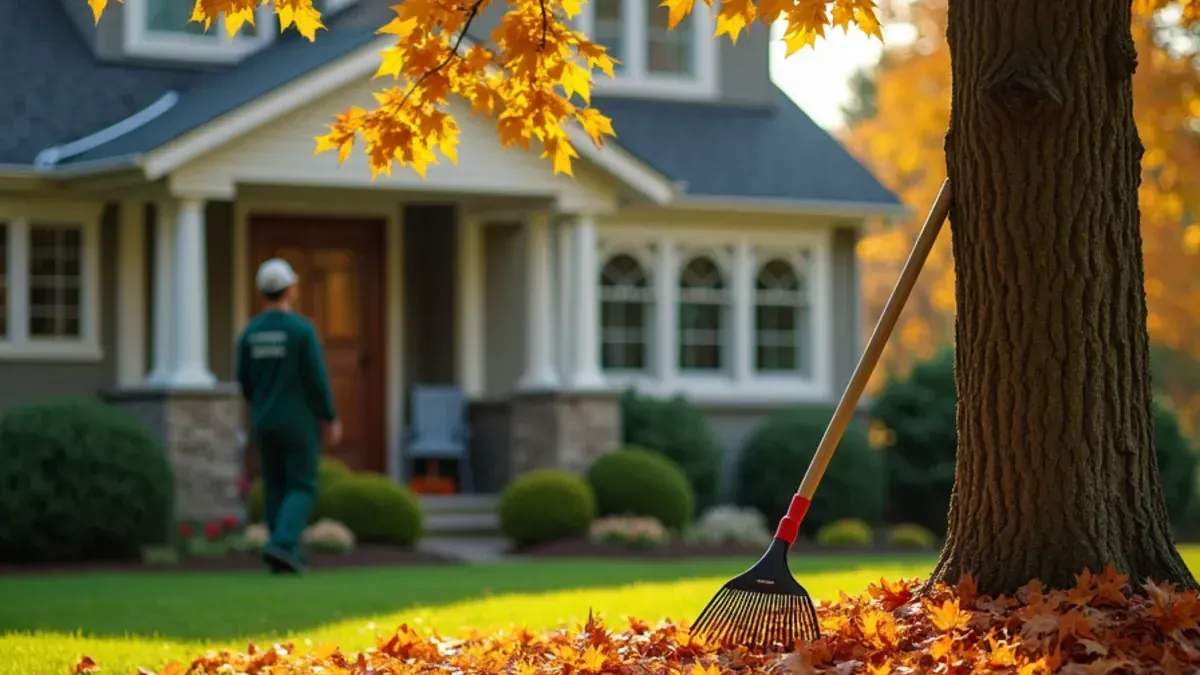
Start fall leaf removal in Indiana when leaves first hide the grass, usually mid-October, and plan two or three passes through early December. Mulch light, dry cover with the mower. Remove thick or wet layers within a week or two, because matted leaves block the light cool-season turf needs to store energy and invite snow mold.
Fall leaf removal in Indiana is really a question of timing. The same pile of maple leaves that does no harm for a few days in October can kill patches of grass if it sits wet and matted into December. Cool-season lawns do much of their root building and food storage in fall, and they need sunlight to do it.
Here is what our crew has learned from years of fall cleanups around Speedway and the south side: why leaves hurt turf, when light cover can simply be mulched, how to plan passes around the trees on your lot, and what to do with the leaves once they are off the grass.
What Leaves Actually Do to a Lawn
Grass keeps photosynthesizing well into November in central Indiana. Those short, cool days are when it stores the carbohydrates that carry it through winter and fuel spring green-up. A solid layer of leaves turns that season off early.
- Light loss: a lawn covered for two to three weeks starts to yellow and thin underneath.
- Smothered seedlings: grass sown in late August or September is still small and gets killed quickly under wet leaves.
- Snow mold: matted leaves under snow hold moisture against the turf and set up gray and pink snow mold patches that show up in March.
- Rodent cover: voles tunnel through leaf mats and snow, leaving winding dead trails across the lawn in spring.
Mulch or Remove? A Simple Rule
You don’t have to haul away every leaf. If you can still see plenty of grass through a light, scattered layer, a sharp mower blade can shred the leaves into small flakes that settle down between the grass blades and break down over the winter.
Once the cover is thick enough to hide the lawn, or the leaves are wet and matted, mulching stops working. You end up with a layer of chopped leaves that still blocks the light. At that point the leaves need to come off.
Plan Your Passes Around Your Trees
Leaf drop in central Indiana usually peaks from late October to mid-November, but each species keeps its own schedule. A single “big cleanup” rarely catches everything.
| Tree | Typical drop in central Indiana | Notes |
|---|---|---|
| Silver and red maple | Mid to late October | Heavy volume, drops fast after the first cold snap |
| Sugar maple | Late October to early November | Large leaves that mat quickly when wet |
| Honeylocust | Early to mid October | Small leaflets are easy to mulch in |
| Oaks (pin, red, white) | November into December | Tough leaves; pin oaks hold some into winter |
| Ornamental pear | Late November | Often the last tree on the street to drop |
Timing depends on the weather each year, so use the table as a guide rather than a calendar. For most lots with mature trees we plan on:
- An early pass in mid to late October to protect new seedlings and keep maple leaves from matting.
- A main pass in early to mid November, when drop is at its peak.
- A final pass in late November or early December after the oaks and pears let go, before the lawn is under snow.
Doing It Without Damaging the Grass
How the leaves come off matters almost as much as when. A lawn that was aerated and overseeded in September has shallow seedlings that heavy raking can tear right out.
- Use a blower or a leaf rake with flexible tines over seeded areas instead of a stiff steel rake.
- Keep heavy equipment off soft, wet ground to avoid ruts and compaction.
- Don’t blow leaves into the street. They clog storm drains and wash nutrients into local creeks.
- Clear beds along the foundation and fence lines, where wind piles leaves deepest and they sit all winter.
Our fall leaf removal service runs these passes on a schedule, and we pair the last visit with a seasonal yard cleanup that cuts back perennials, clears beds and does the final mow of the year at the right height.
Older Neighborhoods With Big Trees
Streets in older towns and neighborhoods tend to carry the biggest leaf loads. Homes we serve for leaf cleanup in Beech Grove are a good example: mature maples and oaks, smaller lots and front yards that can disappear under leaves in a single windy week. Those yards almost always need three passes, not one.
Newer subdivisions with young trees are the opposite. A single mulching mow or two often handles them, and the leaves add a little organic matter back to thin clay soil.
From our crew's experience
What Our Crew Weighs Before Every Leaf Visit
Each visit starts with one question: can this layer go back into the lawn, or does it have to leave the property? Dry, scattered honeylocust and maple leaves get shredded with a mulching pass. Anything wet, deep or lying on September seed gets blown onto tarps and hauled off. Mulching is faster and returns organic matter to tired clay, but hauling is the only safe call once the grass is hidden.
The mistakes we see most on Speedway and west-side lawns:
- Waiting for the last oak to drop, so the lawn sits under cover for a month.
- Leaving raked piles on the turf for days, which shows up as a yellow circle in April.
- Dragging a steel rake through new seedlings a week after paying for overseeding.
- Mowing leaves on soaked clay and leaving ruts that hold water all winter.
DIY is fine on a newer lot with a few young trees and a mulching mower. Call for help when mature maples and oaks drop more than a mower can shred, when the lawn was seeded this fall, or when leaves pile into beds and fence lines faster than you can keep up with them on weekends.
FAQ
Common Questions
Is it bad to leave leaves on the lawn over winter in Indiana?
A light scattering is fine, especially if you mulch it with the mower. A full, matted layer is harmful. It blocks sunlight during the weeks cool-season grass stores energy, smothers young seedlings, and holds moisture that encourages snow mold. Expect thin or dead patches in spring wherever leaves were thickest.
When is the best time for fall leaf removal in central Indiana?
Most yards need attention from mid-October through early December, with the heaviest work in early to mid November. Rather than waiting for every tree to drop, plan two or three passes. The goal is never letting the lawn stay fully covered for more than a week or two at a time.
Can I put leaves in my garden beds?
Yes, in moderation. Shredded leaves make a good winter mulch around shrubs and perennials and break down into organic matter. Avoid thick whole-leaf layers against foundations or piled on crowns of perennials, where they stay wet and can invite rot and rodents. Chopped leaves a few inches deep are plenty.
Should I mulch leaves on a lawn I overseeded this fall?
Wait until the new grass has been mowed two or three times before running a mulching pass over it. Until then, blow leaves off gently every week or so. Seedlings in their first month have shallow roots and little stored energy, so even a thin mat of shredded leaves can set them back.
The Bottom Line
Getting leaves off the lawn on time protects the fall growth your grass depends on, keeps new seed alive and heads off snow mold before spring. A few well-timed passes do more than one heroic weekend in December.
Speedway Lawn Maintenance schedules fall leaf removal across Speedway, Beech Grove and the rest of the Indianapolis area. Text or call 1-323-606-0255 to reserve your passes before the peak weeks fill up.