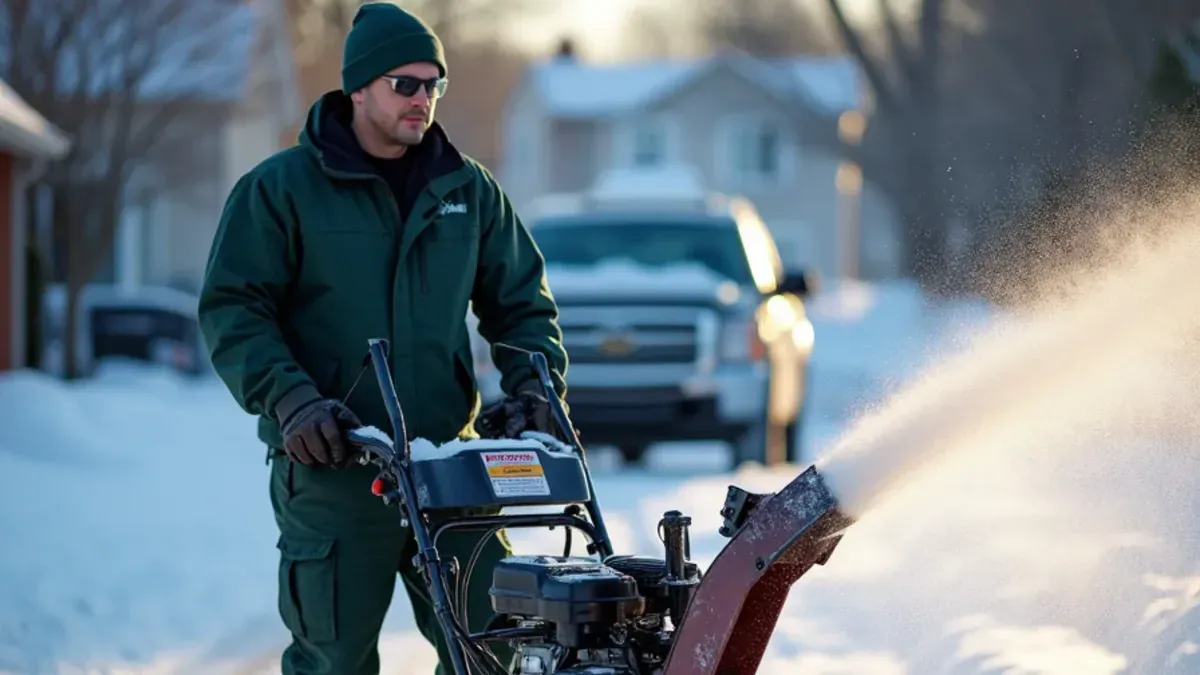
Driveway, sidewalk and small-lot snow clearing with ice melt, offered on seasonal contracts or per-push calls, from the same local crew that mows your lawn.
Emergency snow removal in Speedway, IN from our crew clears driveways, aprons, front walks, steps and small commercial lots, then treats the surfaces so they don’t refreeze into a hazard overnight. Seasonal contract customers are cleared first on every storm. One-time calls are answered and scheduled as crews allow, because we’re a small local company without round-the-clock staffing.
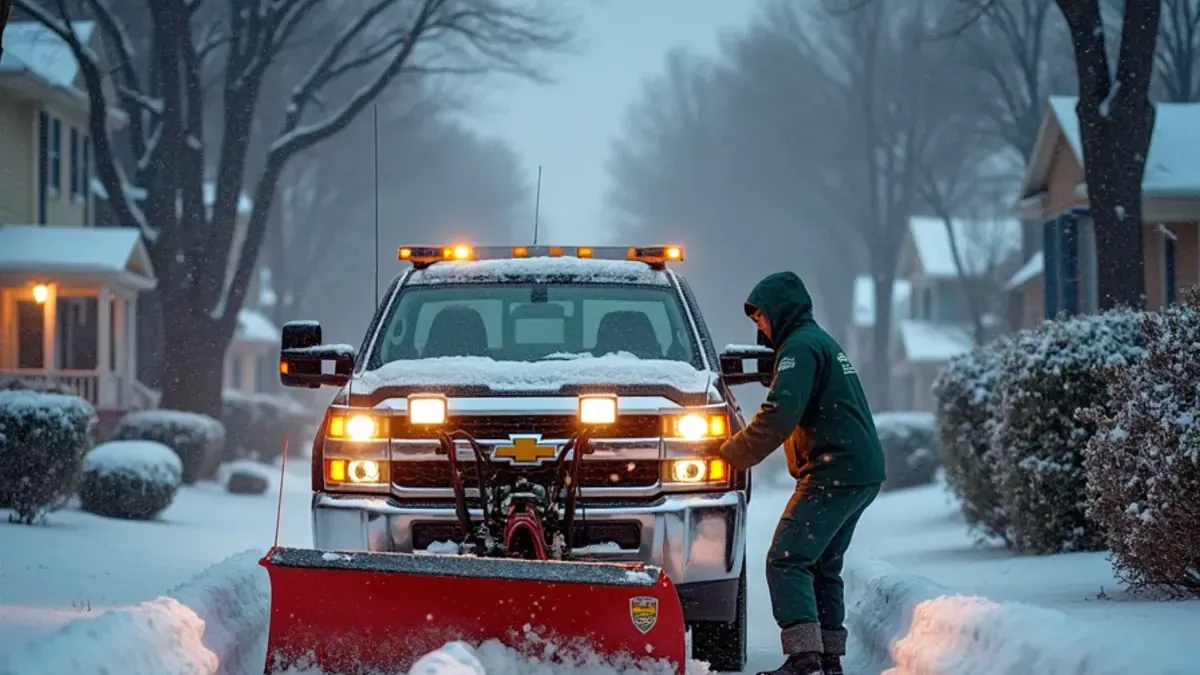
When a storm drops several inches overnight, our emergency snow removal in Speedway, IN clears driveways, front walks and small commercial lots so you can get out the door and customers can get in. We run winter routes from the same home base as our summer mowing, which keeps us close to Speedway, Wayne Township and the west side of Indianapolis when the roads are at their worst.
We’ll be straightforward about how winter works for a small, owner-operated company. We don’t run a round-the-clock dispatch center. Seasonal contract customers are cleared first on every event, and storm calls from non-contract properties are answered and scheduled as crews allow. If you need a guaranteed spot in line, a pre-season agreement is the way to get it.
Central Indiana averages roughly 25 inches of snow a season, but it’s the ice that causes most of the trouble. Freeze-thaw cycles turn melted runoff into black ice on shaded walks and north-facing drives, so we treat surfaces, not just scrape them.
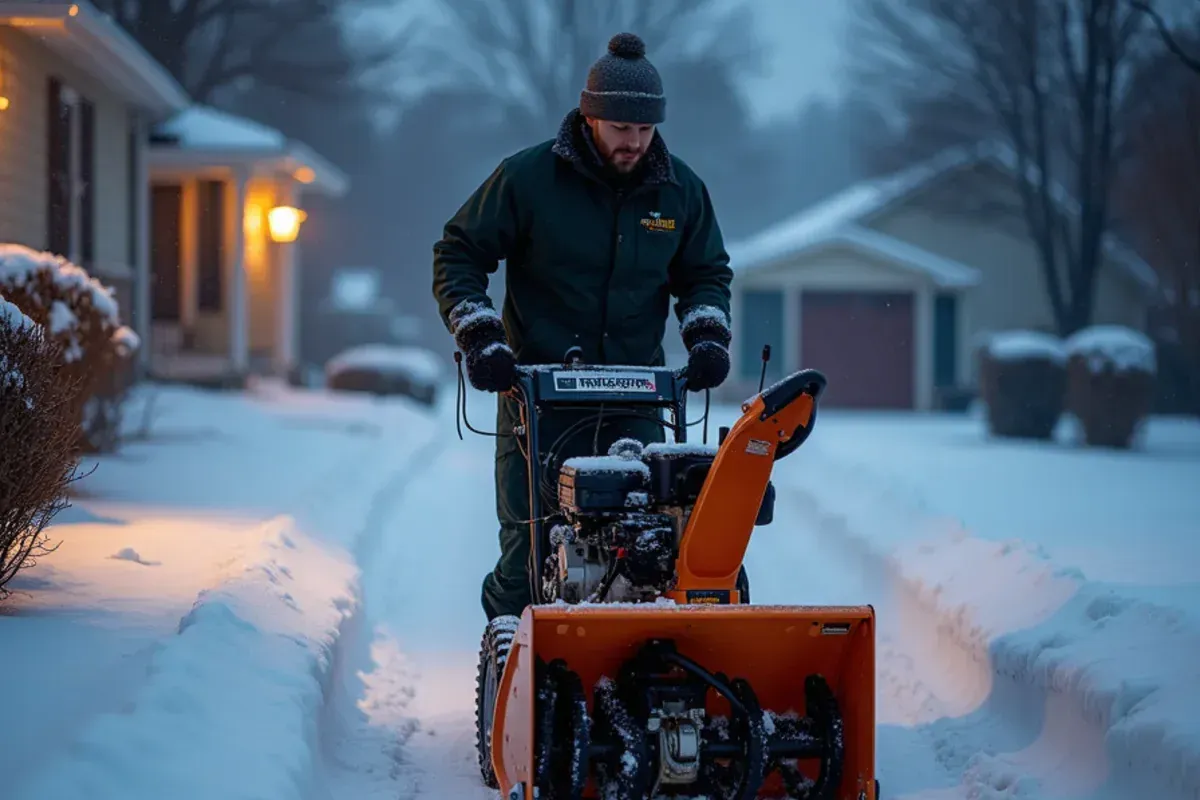
Driveways, walks and steps cleared after the snow stops — contract customers first.
Winter Situations We Clear
These are the calls that fill our phone once the first real storm hits.
Plowed-in driveway apron
City plows leave a heavy, compacted ridge at the end of the drive that’s nearly impossible to shovel by hand once it sets.
Icy front steps and walks
Shaded concrete near the house refreezes every night. A single slip on the steps is a bigger problem than any snowfall total.
Small business lots before opening
Retail, office and church lots need entrances and parking cleared before staff and visitors arrive, not at noon.
Homeowners who can’t shovel
Seniors, people recovering from surgery and anyone with a heart condition shouldn’t be moving wet, heavy snow.
Rental and vacant properties
Landlords and out-of-town owners still have sidewalk obligations and need someone local watching the forecast.
Drifted walks after wind
Open lots and corner properties re-drift after the storm ends, so a second pass is often needed the following morning.
What a Snow Visit Covers
Every property gets a written scope during the pre-season walkthrough, so there’s no guessing on storm day about what gets cleared. A standard residential or small-lot visit includes the following.
Driveway and the plow ridge
Town plows clear the street, and the packed ridge they leave across your apron is the homeowner’s problem. We break it up and move it so you can actually back out.
Walks, steps and the path to the door
Front walks, porch steps and stoops get shoveled by hand where a blade can’t reach, down to pavement rather than a packed layer.
Sidewalk frontage on request
The public sidewalk along your lot can be added to the scope, which matters for landlords and anyone who gets foot traffic past the house.
Ice melt where people walk
Entrances, steps, ramps and shaded walks get treated at label rates, with the product matched to the temperature so it actually works.
Smart pile placement
Snow goes where it won’t block sightlines at the end of the drive, bury a hydrant, or melt salty water straight into foundation beds and turf.
A note after each visit
We record when the property was cleared and treated. Business owners and landlords can keep that record for their own files.
How a Snow Event Runs
Here’s what happens from the first forecast to the final ice-melt pass.
1
Pre-season walkthrough
For contract properties, we note drive length, obstacles, curbs, drains and where snow can be piled without killing turf or blocking sightlines.
2
Forecast watch and trigger depth
Each agreement sets a trigger depth, commonly 2 inches. When accumulation reaches it, your property goes on that storm’s route automatically.
3
Clear contract routes first
Crews work the contract list in route order. During long storms we may make more than one pass to stay ahead of the accumulation.
4
Schedule per-push calls
Non-contract requests are logged as they come in and cleared as crews free up. We give you a realistic window rather than an empty promise.
5
Treat for ice
Walks, steps and entrances get ice melt spread at label rates. We use less on new concrete and near planted beds to limit salt injury.
6
Follow-up checks
After refreeze nights or drifting wind, contract sites can get a return treatment so the morning surface stays safe.
Ice melt matched to the surface — gentler products near turf and newer concrete.
Want a quote for snow & ice removal?
Send a few photos or call 1-323-606-0255 — we'll look at your property and give you a clear, itemized price.
Protecting Your Lawn and Beds From Winter Treatment
Ice melt keeps people upright, but rock salt washed into turf leaves brown strips along driveways by April. We place stakes or reflective markers at drive edges before the ground freezes so blades don’t gouge the lawn, and we pile snow where the melt won’t drain straight into foundation beds.
Spread ice melt at label rates rather than by the handful.
Keep piles off shrubs and away from young trees.
Shovel the first inch or two off before treating so product works on ice, not powder.
Where We Plow and Shovel
Winter routes stay tighter than summer ones because travel time matters more on slick roads. Our core coverage is Speedway and the west side of Indianapolis, with contract properties in nearby Plainfield and Brownsburg considered case by case. Many of our winter customers also use our commercial lawn care in the growing season, which keeps one familiar crew on the property year-round.
What Shapes the Cost of Snow Removal
Snow pricing depends on the property and on how you want to be served. These factors carry the most weight.
Contract or per-push
Seasonal agreements trade a predictable commitment for priority service. One-off calls are priced per visit and served after contract routes.
Surface area
A single-car drive and walk is a very different job from a 20-space office lot with sidewalks on two sides.
Snow depth and moisture
Wet, heavy snow and anything past the trigger depth take longer to move and may require extra passes.
Ice melt usage
Material is part of the cost. Properties with long walks, ramps or steps use more treatment per event.
Hand work vs machine work
Steps, narrow paths and tight spaces between parked cars must be shoveled by hand.
Service timing requirements
Businesses that must be open by a set hour are routed earlier, which affects how we build the storm schedule.
Estimates are free. Send the address and a photo or two of the drive and walks, and we’ll quote both a seasonal and per-push option so you can compare. Call 1-323-606-0255 before the first storm to lock in contract priority.
Why Speedway Neighbors Call Us When It Snows
Plenty of outfits promise instant response in October and stop answering in January. We would rather tell you exactly where you stand.
Honest about capacity
No 24/7 dispatch center and no pretending there is one. Brenda C. called us “honest & reliable,” and we keep that true in winter by never taking on more contract properties than our routes can clear.
The owner is out in the storm
Cameron is on the job year-round. As Mike B. put it in his review, “owner is on the job,” and that doesn’t change when the grass is under snow.
Easy to reach by text
Storm-day questions come in by text and get a real answer about timing. Jessica M. described us as “very easy to communicate with,” which matters most at 6 a.m. on an icy morning.
One local crew all year
We’re a registered Indiana LLC serving Speedway and Indianapolis since 2020, and the crew clearing your lot in February is the same one mowing it in June.
What Customers Say
Posted on Google
This is probably my 5th year with this company. Cameron complies with my wishes with regard to my preferences in height of mower settings and also with trimming. I guess this “ole” lady is pretty picky. He keeps me happy and my yard looks great! I can highly recommend.
No, and we won’t pretend otherwise. We’re a small local crew. During a storm we work long hours, starting with seasonal contract properties in route order. Calls from non-contract customers are returned and scheduled as crews allow. If round-the-clock availability matters for your property, a pre-season contract gives you the highest priority we offer.
What trigger depth should I choose?
Two inches is the most common choice for homes and small businesses around Indianapolis. It keeps drives passable without paying for a visit after a dusting. Businesses with heavy morning foot traffic sometimes choose 1 inch, and many residential customers pair a higher trigger with ice-melt-only visits for light events.
Will ice melt damage my concrete?
New concrete poured within the last year is the most vulnerable, and repeated salt plus freeze-thaw can cause surface scaling. We use lighter rates on young concrete and treat only the areas that actually need it. Sealing the driveway in fall adds protection. Tell us during the walkthrough if any surfaces are new.
Can I sign up for a seasonal contract mid-winter?
Sometimes. Once routes fill up we can’t add properties without slowing service for everyone already on the list. It’s worth asking, especially early in the season, but the best time to sign up is October or November, before the first measurable snowfall hits central Indiana.
Who clears the ridge the street plow leaves at the end of my driveway?
The property owner. Town and city plows push snow off the traffic lanes, and that packed windrow lands across driveway aprons. It’s often heavier and icier than anything on the drive itself. Clearing it is part of every driveway visit we make, and on long storms contract properties get a return pass after the street is plowed again.
Is ice melt safe for dogs, and which kind works in extreme cold?
Plain rock salt stops working well once pavement drops toward the mid-teens and can irritate paws. Calcium or magnesium chloride blends keep working in much colder weather at lower rates. Tell us about pets during the walkthrough and we’ll use a pet-friendlier blend on the steps and paths they use.
The time to plan for emergency snow removal is October, not the night of the storm. Contracts, trigger depths, marker stakes and ice melt choices that protect concrete and turf.
Winter kill lawn repair in Indiana starts with a proper diagnosis. Learn how to tell dormant from dead, what causes freeze damage, and when to reseed or wait for fall.
Book snow & ice removal with a crew that sweats the details.
Get a free, no-pressure quote from a local crew that takes pride in the details. Call, text, or send the form — we reply the same business day.