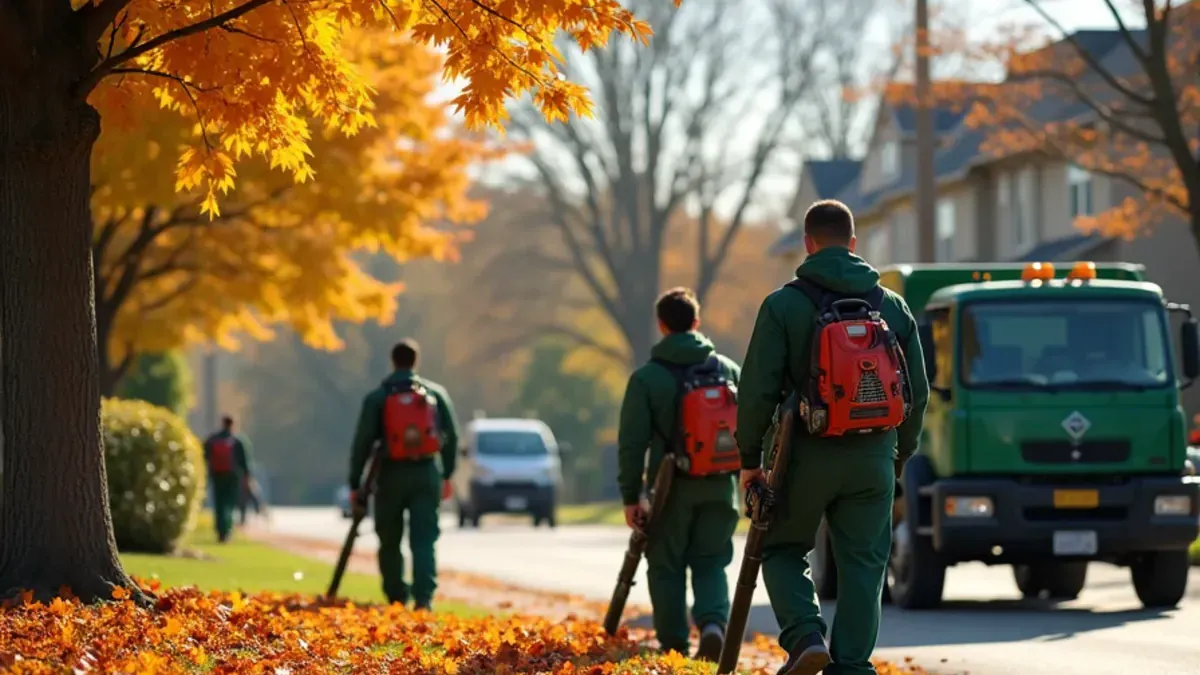
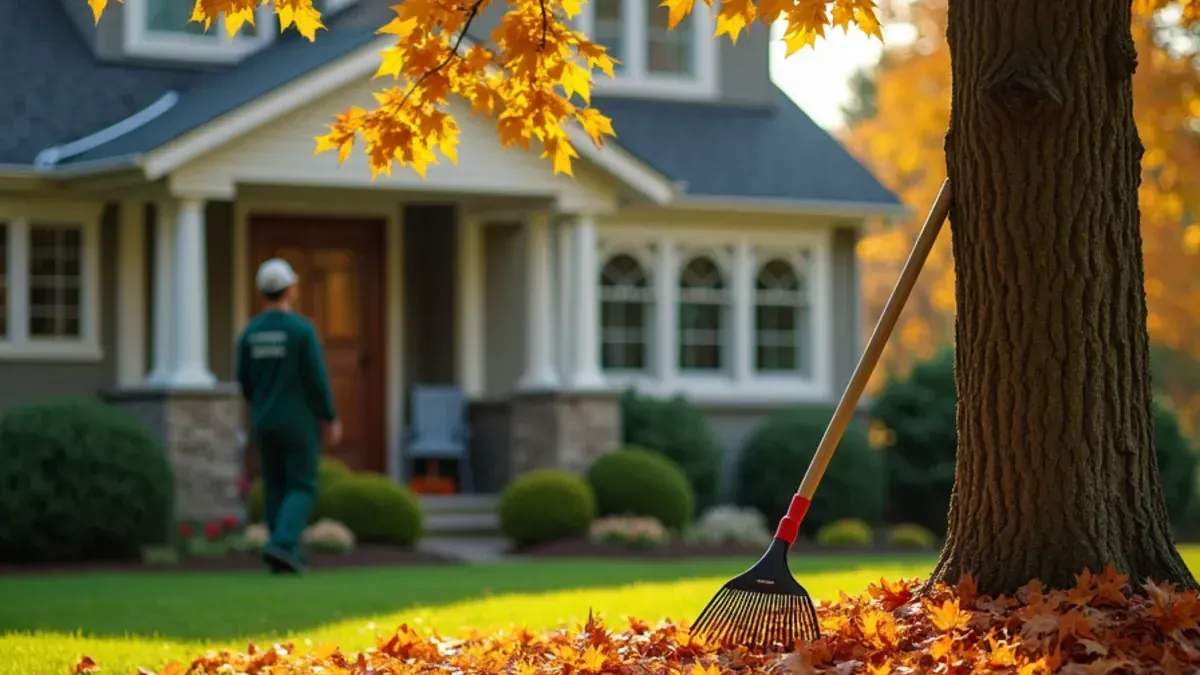
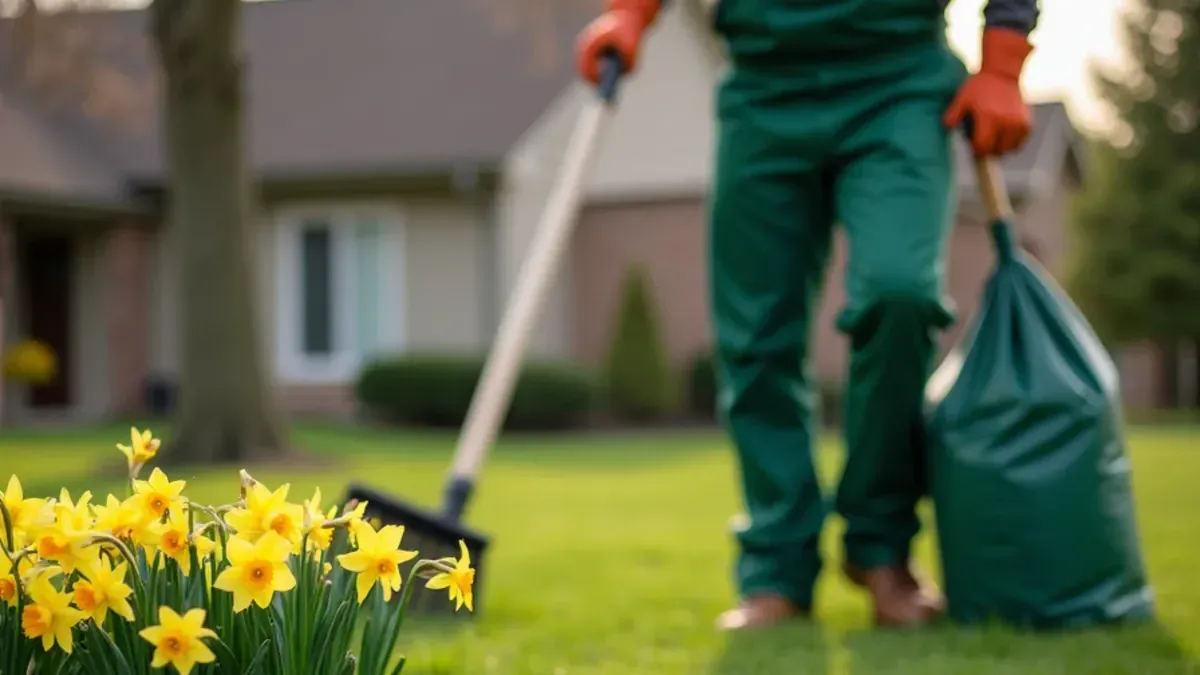
Multi-visit fall leaf removal that keeps matted leaves off your turf, clears beds and curb lines, and hauls every load away before the first lasting snow.
Our leaf removal service in Speedway, IN clears fallen leaves off your lawn, out of your beds and away from your curb, then hauls every load off the property the same day. Most yards get two or three visits between late October and late November, timed to when your own trees drop. The goal is simple: grass that goes into winter able to breathe, and a clean start in April.
Our leaf removal service in Speedway, IN starts from one fact about central Indiana lawns: the grass under your maples and oaks is still working when the leaves come down. Kentucky bluegrass and tall fescue keep growing roots and storing sugars well into November, and a wet blanket of leaves shuts that process off at exactly the wrong time.
Speedway Lawn Maintenance has cleared fall yards across Speedway and the west side of Indianapolis since 2020. Cameron is on these jobs himself, so the person who walks your property in October is the same one who notices the clogged downspout splash block or the hosta bed that should be cut back before winter.
Leaf drop in the metro peaks between late October and mid-November, so most yards need more than one visit. We build that schedule around your trees rather than a date on the calendar.
Multiple fall passes keep leaves from matting down on cool-season turf.
Signs Your Leaves Are Costing You Grass
The damage from leaves shows up months later, after they have been rained on, frozen and pressed flat.
Pale, thin patches in April
Turf that spent the winter under a leaf mat comes back yellowed and sparse, often in the exact outline of where the pile sat.
Gray or pink fuzz after snowmelt
That crusty webbing is snow mold, a fungus that thrives in cold, damp, airless conditions under leaves and long grass. Clearing the cover before snow is the simplest prevention.
Drifts against fences and foundations
Wind stacks leaves into corners, where they rot against siding and give voles winter cover to tunnel through the lawn.
Shrub beds packed with debris
Leaves wedged between shrubs smother low perennials and turn into a slimy layer that slows spring weeding.
The mower just pushes clumps around
Once the layer is thick enough to hide the grass blades, even a good mulching deck stops shredding and starts leaving wet mats behind.
What Every Leaf Removal Visit Includes
A leaf visit is more than blowing the front lawn. Here is what we cover on each stop, so you know what finished looks like before we arrive.
Turf cleared edge to edge
Front, back and side yards, including the strips along fences, under deck edges and behind sheds where wind packs leaves the deepest.
Beds worked by hand
Leaves come out from between shrubs and around perennials without dragging your mulch or river rock out with them.
Hard surfaces and the curb line
Driveway, walks, patio and porch steps get blown clean, along with the street gutter and storm grate in front of your house.
Same-day haul-off
Everything is loaded and taken away. You don’t bag anything or wait on the town’s seasonal yard-waste pickup, which winds down in early December.
Tight spots and drainage points
Window wells, downspout outlets, splash blocks and the space around AC units get cleared so meltwater has somewhere to go.
A text after each visit
We tell you what got done, when the next pass makes sense, and anything we noticed, like a buried sprinkler head or a low spot holding water.
How Our Fall Leaf Cleanup Works
Every property is a little different, but the sequence stays consistent so nothing gets skipped between visits.
1
Read the trees first
We note which trees you have and when they let go. Silver maples often drop early, while pin oaks can hang on into December, so a yard with both needs a later final visit.
2
Mulch light drops back into the turf
Early in the season, when grass still shows through the leaves, we chop them fine with the mower so the pieces sift down and decompose.
3
Switch to collection when the layer thickens
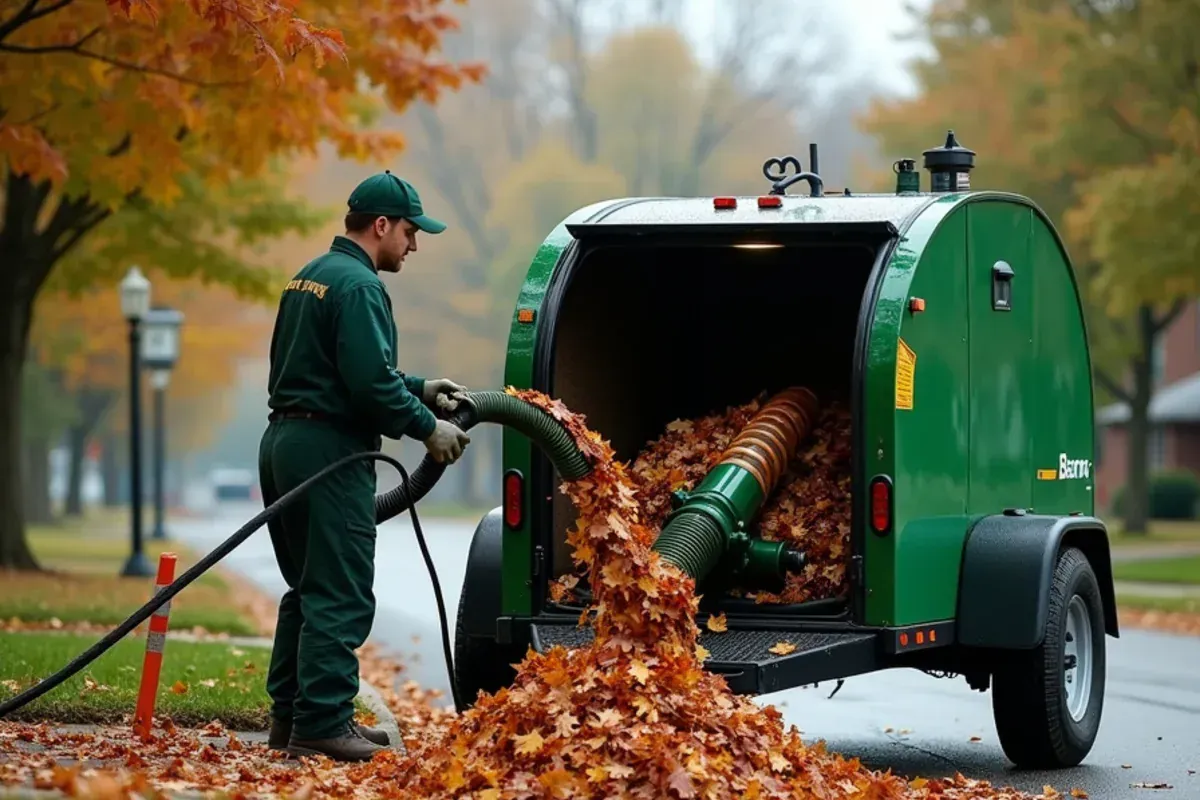
Once leaves cover the blades, we blow them into windrows, pull them onto tarps, and haul every load off the property that day.
4
Clear the hard-to-reach spots
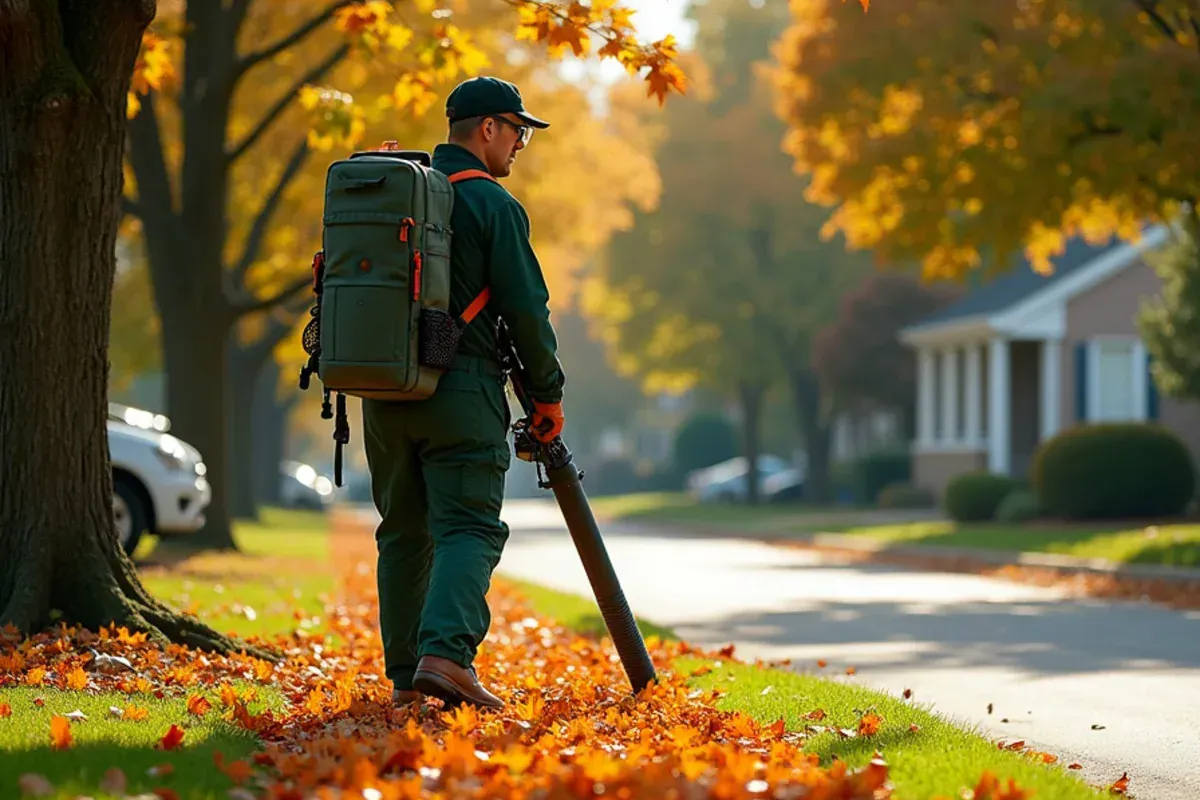
Backpack blowers work leaves out of beds, window wells, fence lines, from behind AC units and off the street gutter along your curb.
5
Finish with a final cut
On the last visit we mow at about 3 inches, short enough to resist matting under snow but never scalped, and blow off walks and the driveway.
Leaves vacuumed and hauled away — nothing left in a pile on the street.
Want a quote for leaf removal?
Send a few photos or call 1-323-606-0255 — we'll look at your property and give you a clear, itemized price.
Chopping leaves into the lawn is a legitimate practice, not a shortcut. Finely shredded leaves add organic matter to heavy clay and disappear by spring, as long as the turf can still breathe through what is left.
Mulch in place when you can still see grass between the leaves and the pieces shred to about the size of a dime.
Collect and remove when the layer is deeper than an inch or two, when leaves are wet and clumping, or when they have blown into beds.
Always remove leaves from newly seeded areas, because young seedlings cannot push through a mat the way mature turf can.
A Typical Fall Leaf Schedule in Central Indiana
Late October: first pass to catch early droppers and clear beds before perennials are cut back.
Early to mid-November: the heavy visit, usually the largest haul of the season.
Mid to late November: final collection, curb-line cleanup and the last mow of the year.
Older neighborhoods with big shade trees, like the maple-lined streets we service in Beech Grove and parts of Indianapolis, often need that third visit. Newer subdivisions in Avon with younger trees can usually finish in two.
We don’t publish flat rates for leaf work, because two lots of the same size can hold very different amounts of canopy. These details move a quote.
Number and size of trees
One ornamental pear and three mature maples produce very different volumes, and volume drives labor and hauling.
How many visits you want
A two- or three-visit schedule keeps each load manageable, while a single late cleanup means handling everything at once.
Leaf condition
Dry, fluffy leaves move quickly. Rain-soaked, matted layers are heavier and slower to lift off the turf.
Mulching versus haul-off
Leaves we can chop back into the lawn cost less to handle than leaves that have to be loaded and removed.
Beds and obstacles
Dense shrub beds, fences, play sets and narrow back-yard gates require hand work that an open front lawn does not.
Quotes are free and based on a look at your trees, not a guess over the phone. Call 1-323-606-0255 or text us a few photos of the yard, and we’ll set up a visit before the heaviest drop arrives.
Why Speedway Neighbors Hand Us Their Fall Leaves
Leaf season is short and the weather rarely cooperates. These are the reasons customers keep us on the calendar year after year.
The owner is on the job
Cameron works the leaf routes himself, so the person quoting your trees is the one clearing them. Mike B. put it plainly in his Google review: “They care and owner is on the job.”
Scheduling by text, around the rain
Send a few photos of the yard and we reply the same business day. When a soaking rain pushes a visit, we text the new day instead of lifting wet mats in a rush. Peter C. called our service “easy to schedule via text.”
A neat finish, every stop
Jane T. wrote that Kyle Foster’s crew “left everything neat and clean” after a mowing and mulching job. Leaf visits end the same way: clear walks, clean curb, gates latched.
A 48-hour fix-it guarantee
If we miss the drift behind the garage or leave leaves on the walk, tell us within 48 hours and we come back and fix it at no charge. We have served Speedway since 2020 and hold a 4.8★ rating from 38 Google reviews.
What Customers Say
Posted on Google
Cameron scheduled my lawn maintenance within a week of my first contacting him (unlike other services, whose people never respond). He saved my yard from a weed overtaking and turned it into a beautiful, clean landscape with the lovely diagonal lines I've always wanted.
Most yards are ready for a first pass in the last week of October, when maples and ash trees are dropping heavily. Starting earlier rarely saves work because the bulk of the canopy is still up. We plan the final visit for mid-to-late November, after oaks and pears have mostly let go, so your lawn goes into winter clear.
Can I just leave the leaves on my lawn over winter?
A light scattering is fine and can be mowed in. A full layer is a different story. Wet, compacted leaves block light, trap moisture and create ideal conditions for snow mold, which leaves matted, dead-looking patches in spring. Cool-season grass also loses weeks of late-fall root growth when it sits in the dark under leaves.
Do you haul the leaves away or leave them at the curb?
We haul them away. Every load goes onto our equipment and off your property on the day of service, so you are not waiting on a municipal pickup or watching a curb pile blow back across the yard. It also keeps the storm drains on your street clearer.
Do you clean roof gutters during leaf removal?
No, we work at ground level. That includes clearing leaves from downspout outlets, splash blocks, window wells, beds and the street gutter along your curb. We don’t go up ladders to clean roof gutters, so if yours need attention, schedule that before our final visit and we will pick up whatever lands on the lawn.
How many leaf cleanups does a typical yard need?
Two to three for most Speedway lots. A yard with one or two younger trees can often finish in two passes, one in early November and one near Thanksgiving. Properties with several mature maples or oaks usually need a third, because the canopy lets go in waves and the last trees hold on well into late November.
How much does leaf removal cost in Speedway?
It depends on how many trees drop on the lot, how many visits you want, whether the leaves are dry or matted, and whether they can be mulched in or have to be hauled. We don’t quote a flat rate sight unseen. Text us photos and we will give you a written quote after looking at the canopy.
Leaves left on the lawn through November block light, smother new seedlings and set up snow mold. Here is when to mulch, when to remove, and how many passes central Indiana yards need.
A practical spring lawn cleanup checklist for Marion County: when to rake, how to handle winter damage, bed and edge prep, the first mow and crabgrass timing.
Book leaf removal with a crew that sweats the details.
Get a free, no-pressure quote from a local crew that takes pride in the details. Call, text, or send the form — we reply the same business day.