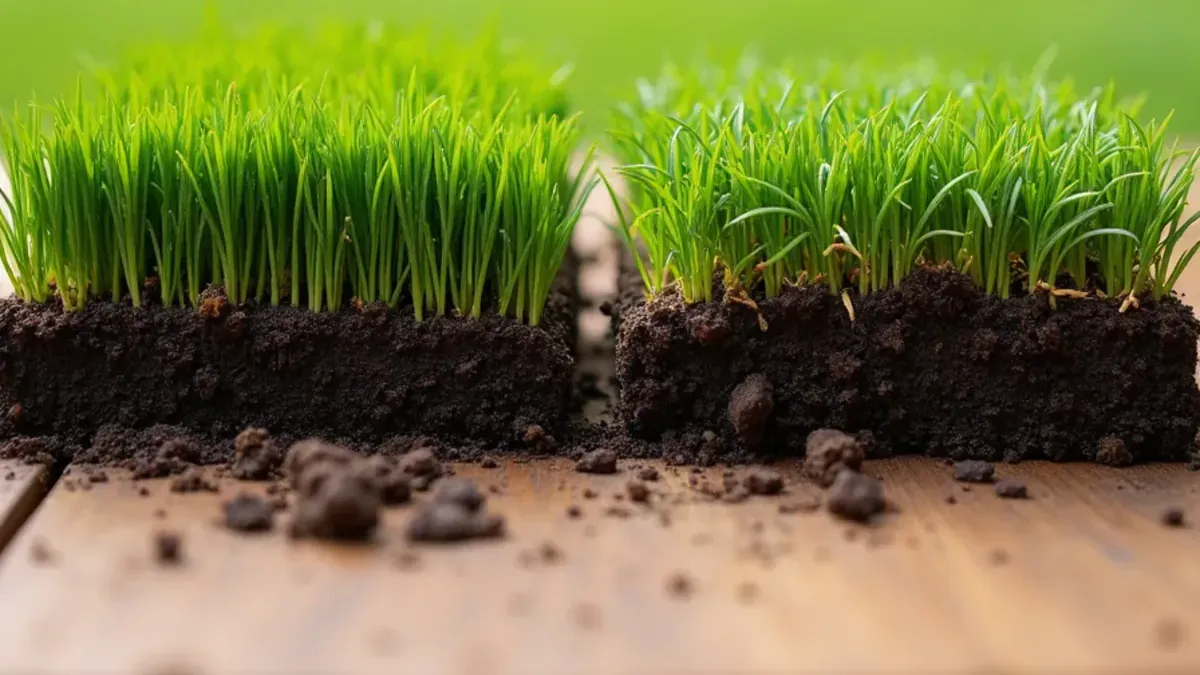
Tell dormant grass from dead grass, water it correctly, and rebuild thin turf with fall overseeding — a practical plan to carry your lawn through Indiana summers.
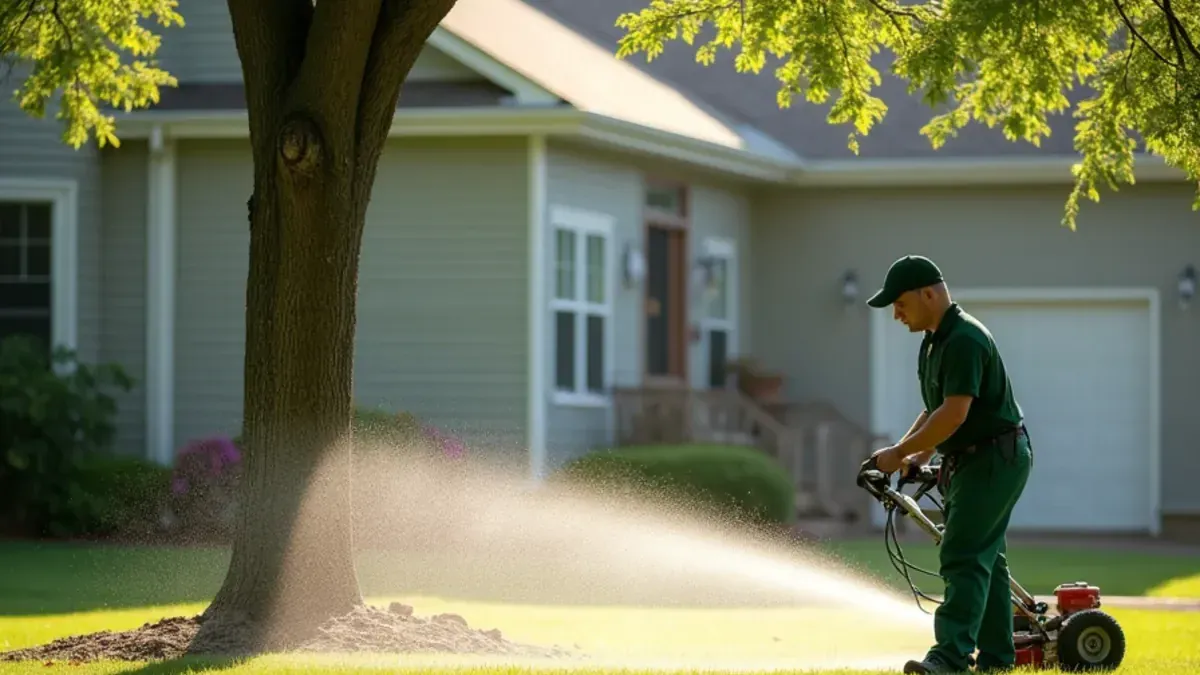
Drought lawn recovery in Speedway, IN from our crew starts by sorting dormant grass from dead grass, then gives you a watering plan, summer mowing rules and a fall aeration-and-overseeding rebuild for whatever didn’t survive. We hold fertilizer and blanket weed sprays while the turf is heat-stressed, and move quickly once temperatures break.
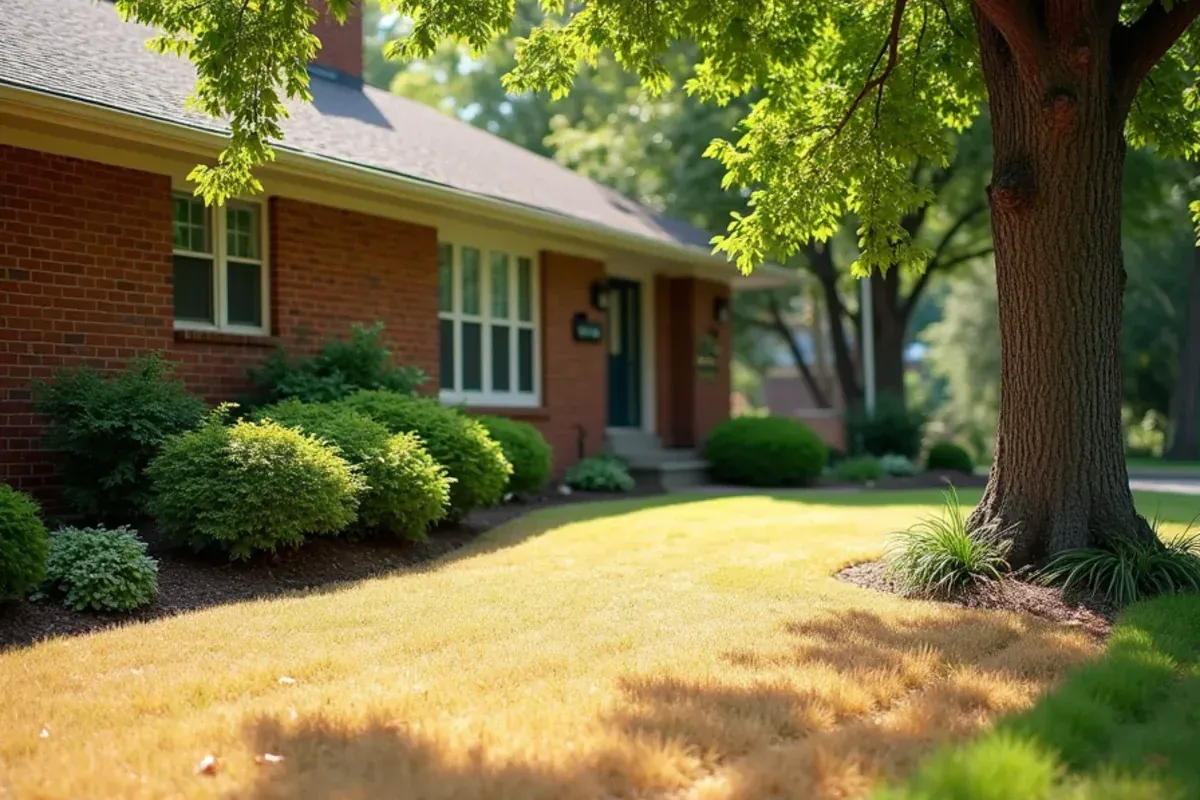
Drought lawn recovery in Speedway, IN starts with one honest question: is the grass sleeping or is it gone? Cool-season turf across Indianapolis — Kentucky bluegrass, tall fescue and perennial ryegrass — goes tan and crunchy during long stretches of heat and missed rain. Much of that brown is dormancy, a survival mode the plant can come back from. Some of it is not, and the plan for each is completely different.
Our drought-rescue service gives you a diagnosis, a watering plan you can actually follow, mowing adjustments that reduce stress, and a fall recovery program to fill whatever didn’t survive. We’d rather tell you to wait for September than sell you a treatment that burns a stressed lawn in August.
Customers have told us that Cameron got their yards through summers that were hard on every lawn on the block. That comes down to timing: backing off when the turf can’t handle inputs, then moving quickly once conditions turn.
Summer dormancy on a Speedway lawn — brown, but usually not dead.
Signs Your Lawn Is Struggling in the Heat
Drought stress shows up in stages. Catching it early means more of the lawn recovers without reseeding.
Footprints that stay
Walk across the lawn in the evening. If your footprints are still visible a half hour later, the blades don’t have enough water to spring back.
Blue-gray cast
Before grass turns tan, it often takes on a dull bluish tint as the blades fold and curl to conserve moisture.
Brown patches along hot edges
Turf next to driveways, sidewalks and south-facing foundations browns first because pavement radiates heat into the root zone.
Entire lawn gone straw-colored
Uniform tan across the whole yard after two or three dry weeks usually signals dormancy rather than death.
Grass that pulls up easily
If brown turf lifts like a loose rug, grubs or dead roots may be the real cause, not just a lack of rain.
Weeds thriving while grass fades
Crabgrass, nutsedge and spurge love the heat and fill gaps fast wherever the turf has thinned.
What the Drought-Rescue Service Includes
A rescue plan is mostly knowing what not to do in July and exactly what to do in late August. Here’s what you get when we take on a stressed lawn.
A zone-by-zone diagnosis
We tug-test turf in full sun, shade, along pavement and in low spots, and mark which areas are dormant, thinning or already lost.
A root-zone check
Suspect patches get peeled back to look for grubs, rotted roots or disease, so a pest problem isn’t written off as a dry spell.
A watering schedule built for clay
You get run times, cycle-and-soak timing and a weekly target for your sprinklers or hose setup, plus a lighter plan if you’d rather let the lawn sleep.
Summer mowing rules
Sharp blades, a height held at the top of the range, and no mowing on dormant turf, where wheel tracks can kill the crowns underneath.
Weed triage, not blanket spraying
Crabgrass, nutsedge and spurge get spot-treated only when the turf around them can tolerate it, following the product label and Indiana State Chemist rules.
A fall rebuild and follow-up
Dead and thin areas are core aerated and overseeded in the August 15 – September 15 window, fed once seedlings are up, and checked again after the weather turns.
Our Drought-Rescue Plan, Step by Step
Recovery is a sequence, not a single visit. Here’s how we approach it.
1
Diagnose with the tug test
We grab a handful of brown turf and pull gently. Firm resistance means roots are alive and the grass is dormant. If it snaps off or lifts freely, that area needs replacing.
2
Check for grubs and disease
Drought symptoms overlap with grub feeding and summer patch diseases, so we peel back suspect spots before assuming the weather is the only problem.
3
Set a realistic watering plan
We lay out how to deliver 1–1.5 inches per week in one or two deep early-morning soakings, or how to hold a dormant lawn safely with minimal water.
4
Raise the mowing height
Our mowing crew moves up to the top of the 3–4 inch range and mows less often, never removing more than a third of the blade.
5
Hold off on stressful inputs
No fertilizer on fine fescue above 85°F and no blanket weed spraying on stressed turf. Applications follow the product label and resume when temperatures break.
6
Rebuild in the fall window
From mid-August to mid-September we aerate and overseed thinned or dead areas, then feed to push roots before winter.
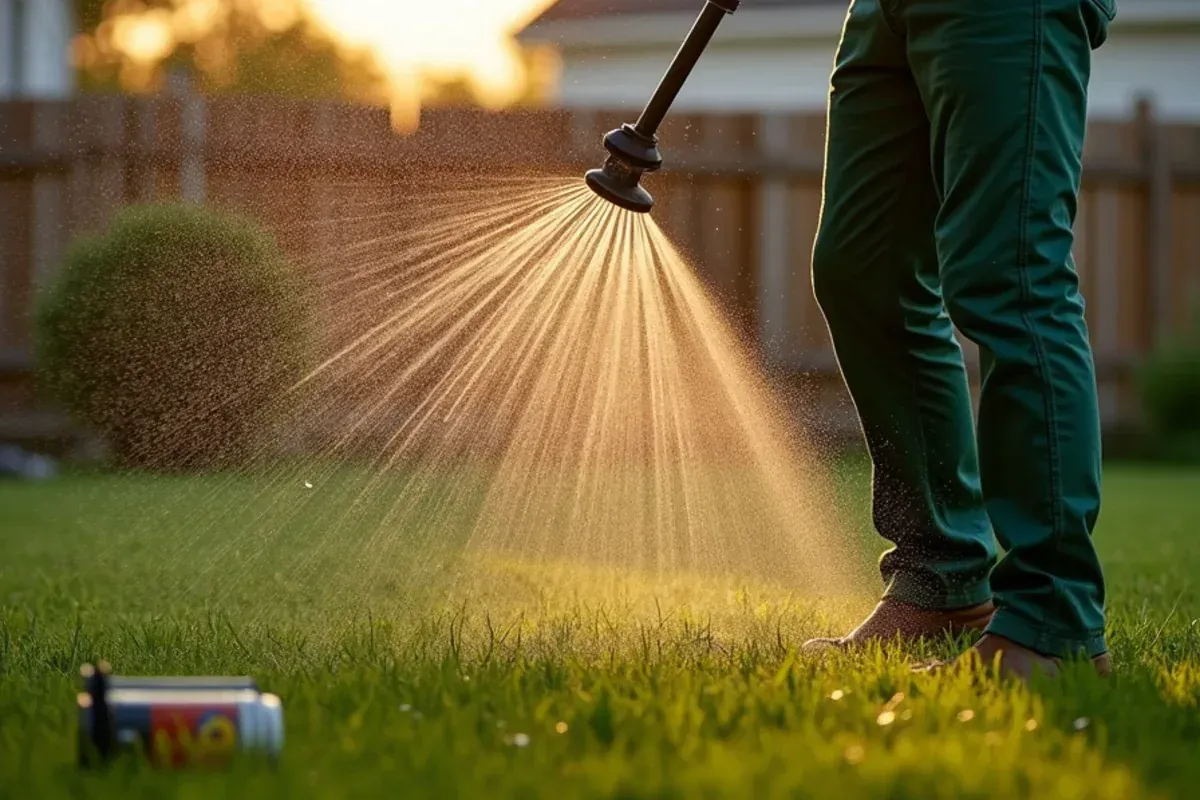
Early-morning deep watering — about 1 to 1.5 inches a week, not a daily sprinkle.
Want a quote for drought rescue?
Send a few photos or call 1-323-606-0255 — we'll look at your property and give you a clear, itemized price.
A healthy cool-season lawn can typically survive three to four weeks of dormancy without water. Beyond that, the crowns start to dehydrate and the risk of real loss climbs. Here’s how to read what you’re seeing.
Water between 4 and 9 a.m. so the blades dry before evening and fungus has less chance to take hold.
Go deep and infrequent. A tuna can on the lawn tells you when you’ve reached about an inch.
On clay, run sprinklers in two shorter cycles an hour apart so water soaks in rather than running down the gutter.
Once you break dormancy with water, keep going. Waking the lawn up and letting it dry out again burns through its stored energy.
Planning the Fall Comeback
Late summer is when the real rescue happens. Purdue Turfgrass places the primary seeding window at August 15 to September 15, and our aeration and overseeding service is built around it. A follow-up feeding from our lawn fertilization program then helps new seedlings root before the first frost. We run fall recovery work throughout Indianapolis and out to newer, sun-baked subdivisions in Greenwood and Brownsburg, where thin topsoil over compacted fill makes drought damage worse.
What Goes Into a Drought-Rescue Quote
Every stressed lawn needs a different mix of patience and work. These are the factors that set the price.
How much turf actually died
A dormant lawn may need nothing but water and time, while large dead areas require seed and soil preparation.
Lawn size
Seed, fertilizer and aeration are all measured by square footage, so the treated area drives material cost.
Soil compaction
Hard clay and builder-grade fill often need core aeration before seed will establish, which adds a step.
Grass type and sun exposure
Shady fine fescue and full-sun bluegrass or tall fescue need different seed blends and timing.
Underlying problems
Grubs, disease or thatch found during diagnosis may need their own treatment before recovery work will hold.
One-time rescue or ongoing program
Recovery folded into a season-long fertilization program is structured differently than a single late-summer renovation.
The diagnosis and quote are free. We’ll look at the lawn in person or review photos, tell you plainly whether it’s dormant or dead, and give you one written price for the recovery plan. Call 1-323-606-0255 to set it up.
Why Customers Trust Us With a Stressed Lawn
A hot, dry summer is where timing matters most, and where a lawn company can do real damage by treating on schedule instead of by conditions.
We’ve carried lawns through rough summers
Robert S. wrote that “it was a difficult summer for lawns but Cameron got us through,” and that he was prompt with applications.
Treatments timed to the weather
Pete C. noted that Cameron “keeps an eye on the weather and makes sure the treatments are done at the correct time.” In a drought, that often means waiting a few weeks.
We tell you when to do nothing
If the lawn is dormant and firm, the honest answer is water or wait. We won’t sell a summer treatment that stresses turf further just to fill a route.
Local, insured and on label
We’re a registered Indiana LLC serving Speedway and Indianapolis since 2020. Every application follows the product label and Indiana State Chemist rules.
What Customers Say
Posted on Google
Cameron is very professional and great to work with. He always leaves the lawn well manicured and tidy. Very pleased!
Should I water a dormant lawn or let it stay brown?
Either is fine as long as you commit. A dormant lawn needs only about half an inch of water every two to three weeks to keep crowns alive. If you choose to keep it green, it needs a steady 1–1.5 inches weekly. The damaging option is switching back and forth, which drains the plant’s reserves.
Can I fertilize to help my lawn green up during a drought?
Not in the heat of summer. Nitrogen pushes top growth the roots can’t support, and on fine fescue above 85°F it can scorch the turf. We wait until temperatures moderate and the lawn is actively growing again, typically late August or September, then feed to support recovery and fall root growth.
How long does it take a dormant lawn to green up?
Once regular rain returns, dormant bluegrass and tall fescue usually show new green growth within one to three weeks. Areas that stay brown after a month of good moisture have likely died and will need overseeding. We check back after the weather breaks so you know exactly which spots to seed.
Is tall fescue better than bluegrass for drought?
Turf-type tall fescue has deeper roots and usually stays green longer in dry spells, while Kentucky bluegrass goes dormant sooner but recovers well and spreads to fill gaps. Many Indianapolis lawns do best with a blend. If you’re reseeding after a rough summer, our crew can recommend a mix suited to your sun and soil.
Should I mow a brown, dormant lawn?
No. Purdue turf specialists warn that mowing or walking on dormant turf can kill the grass in the wheel and foot tracks. A dormant lawn barely grows, so there’s little to cut anyway. We skip those visits and resume once rain returns and the grass is actively growing, cutting with sharp blades to avoid shredded, browned tips.
Can a lawn be aerated during a drought?
Not usefully. Tines barely penetrate baked clay, and pulling cores from dry soil exposes stressed roots to even more heat. We wait until a good soaking rain or several days of irrigation softens the ground, which on most Indianapolis lawns lines up with the late-summer seeding window anyway.
Brown grass after a dry Indiana summer is usually dormant, not dead. Learn how to tell the difference, what to stop doing now, and the fall plan that brings turf back.
Kentucky bluegrass heals itself and looks the part; turf-type tall fescue shrugs off drought and shade. Here is how the two compare on central Indiana clay, and why most lawns end up with both.
Book drought rescue with a crew that sweats the details.
Get a free, no-pressure quote from a local crew that takes pride in the details. Call, text, or send the form — we reply the same business day.