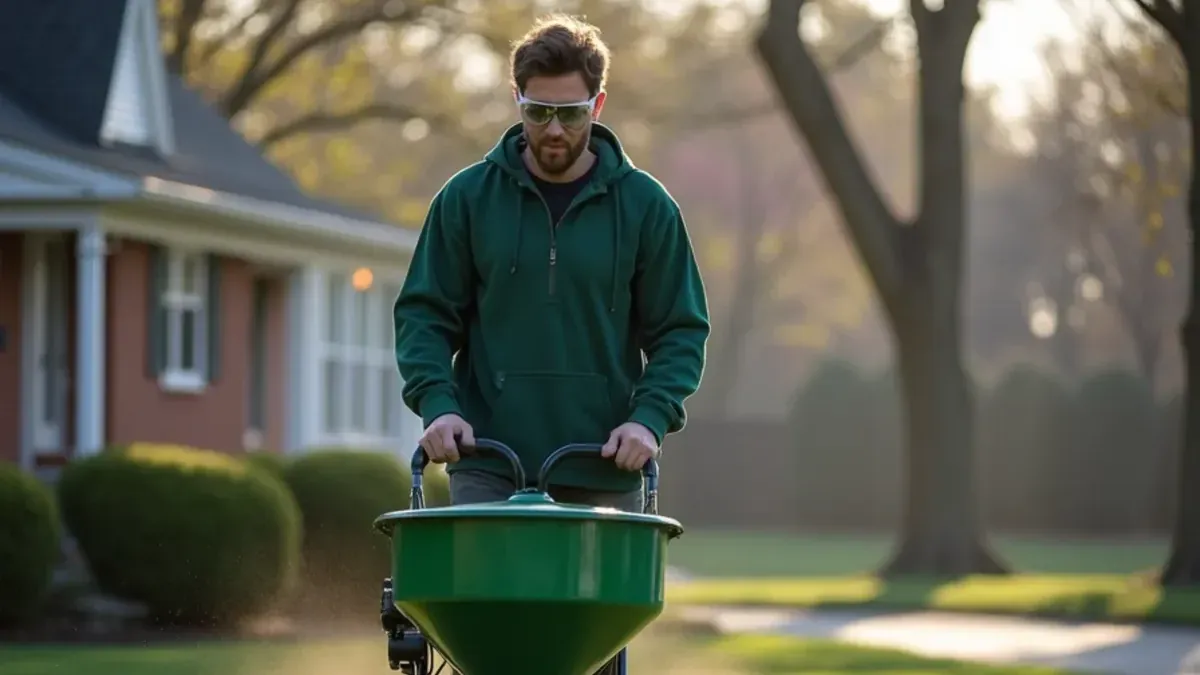
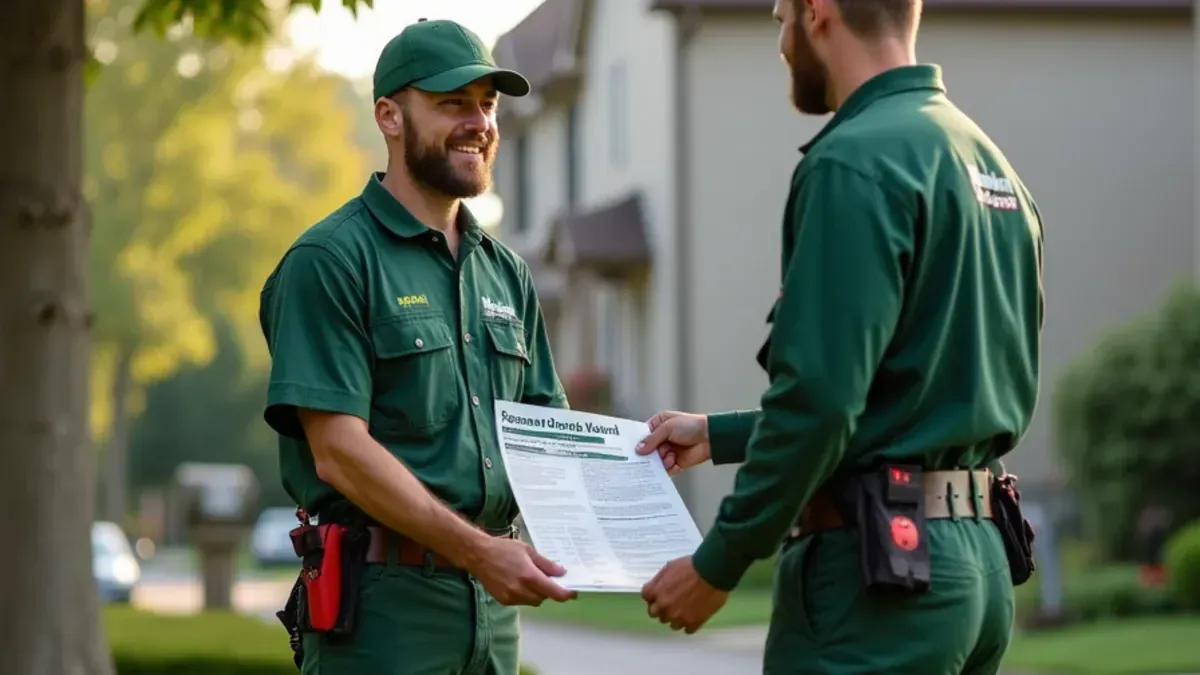
A six-application seasonal feeding program for Indiana cool-season lawns, timed to soil temperature and the forecast so every round lands when your grass can use it.
Our lawn fertilization service in Speedway, IN is a six-round seasonal program for bluegrass and tall fescue lawns, running from a spring crabgrass barrier to a late-fall winterizer. Each round is timed to soil temperature and the forecast, applied to label and Indiana State Chemist rules, and followed by a text with watering and re-entry instructions.
A lawn fertilization service in Speedway, IN only pays off if the product lands when the grass can actually use it. Our program is six applications spread from early spring to late fall, each matched to what Kentucky bluegrass and tall fescue are doing below the surface at that moment. Customers around Speedway and Indianapolis tell us the treatments arrive at the correct time, not just on a date circled on a calendar.
Central Indiana hands turf a tough year: sticky clay, a soggy spring, then weeks of July heat with hardly any rain. We check soil temperature and the ten-day forecast before every round. If a downpour would wash granules into the gutter or a heat wave would scorch the blades, the application moves. That judgment separates a deep green lawn from money left on the sidewalk.
Every product goes down according to its label and Indiana State Chemist (OISC) rules. You get a text before we arrive and a follow-up covering watering and when kids and pets can head back outside.
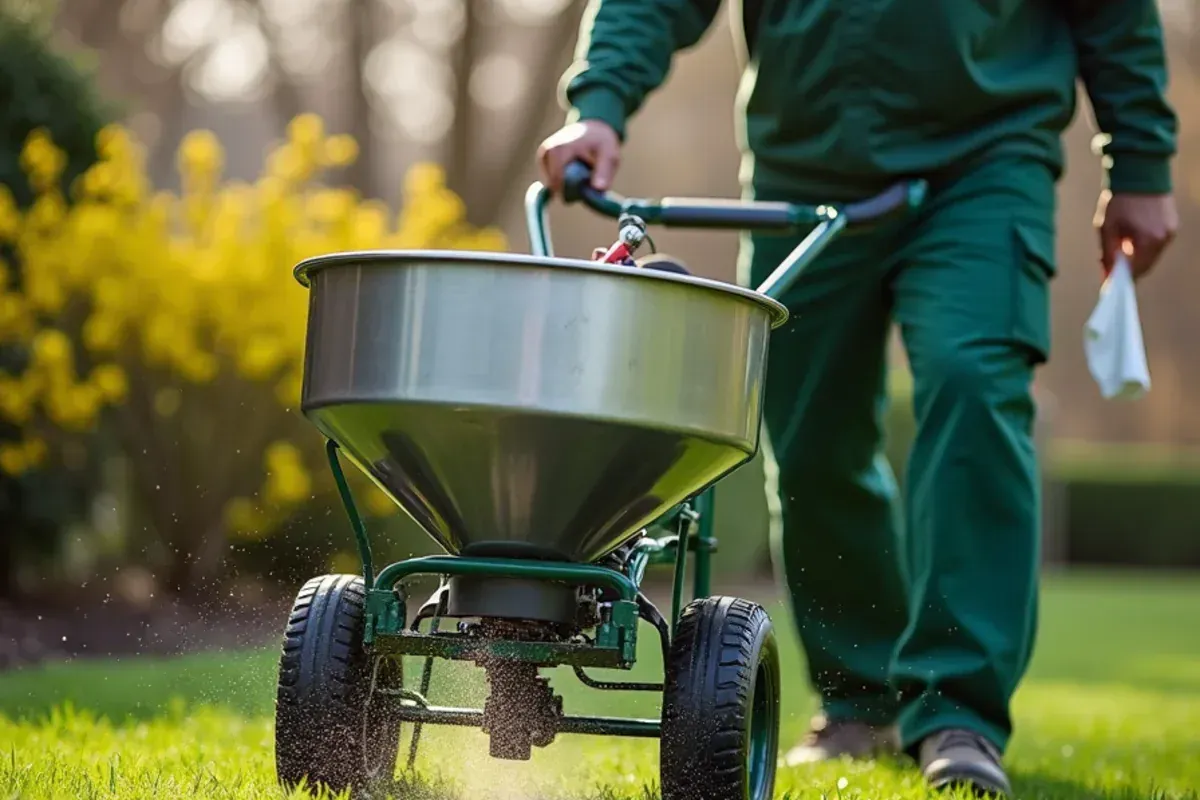
Granular feedings timed to soil temperature and the forecast, not a fixed calendar date.
Signs your lawn is underfed
Hungry turf in central Indiana tends to give itself away in a handful of predictable ways.
Pale, yellow-green color in spring
Nitrogen-starved bluegrass greens up slowly and never reaches a rich color, especially on builder-grade fill with little topsoil.
Thin turf that invites weeds
Crabgrass and clover exploit exposed soil. A dense, well-fed canopy is the best natural weed barrier a yard has.
First lawn on the block to brown in July
Shallow roots from spotty feeding give out quickly in heat. A fall-weighted program builds the root mass that carries turf through summer.
Dog spots and worn paths that linger
When urine spots and foot-traffic lanes take weeks to fade, the grass lacks the reserves to repair itself.
Green-and-yellow banding
Missed passes from a drop spreader leave obvious stripes of uneven color. We use a calibrated rotary spreader with overlapping passes.
Treatments that seemed to vanish
Granules spread right before a thunderstorm end up in the storm drain. Weather-timed rounds stay in the root zone where they belong.
What you get in the program
A program is more than six bags of product. These are the pieces that come with every lawn we feed, whether it’s a small Speedway front yard or a larger lot out toward Brownsburg.
Six rounds on a seasonal schedule
Early spring, late spring, early summer, midsummer, early fall and late fall, each with its own purpose instead of the same blend six times over.
Slow-release nitrogen, weighted to fall
Summer rounds stay light. The September and late-season rounds carry most of the year’s nitrogen, in line with Purdue’s advice that fall feeding builds the densest cool-season turf.
A spring crabgrass barrier
Round one includes a pre-emergent timed before soil holds near 55°F, unless you’re seeding that spring and we plan around it.
Spot treatment of broadleaf weeds
Dandelions, clover and plantain that show up between rounds get spot-sprayed during the visit rather than blanket-treated.
A weather and soil check before each round
We look at soil temperature, daytime highs and the 48-hour rain outlook, and we move the visit when the numbers say to.
Granules kept on the turf, not the street
After spreading, stray granules are blown off the driveway, walk and curb back onto the lawn so nutrients don’t wash into the storm drain.
A text after every visit
What went down, whether to water it in, and when kids and pets can go back out, sent the same day.
How our six-application program runs
Each round has a specific job. Here is how a typical year unfolds on a Speedway or west-side Indianapolis lawn.
1
Round 1 — Early spring pre-emergent and light feed (late March–mid April)
Timed before soil holds at about 55°F, this visit pairs crabgrass prevention with a modest dose of nitrogen so top growth doesn’t outrun waking roots. Our crabgrass and broadleaf weed control page covers that barrier in detail.
2
Round 2 — Late spring feeding and spot spraying (May)
Slow-release nitrogen supports the lawn through its fastest growth of the year, and we spot-treat dandelions and clover that slipped through.
3
Round 3 — Early summer, stress-aware (June)
A lighter slow-release feeding holds color without forcing growth ahead of the heat. Grub prevention can be added at this visit where damage has shown up before.
4
Round 4 — Midsummer maintenance (July–August)
When temperatures run above 85°F we hold back on nitrogen, particularly on shaded fine fescue, and apply only what the turf can handle without burning.
5
Round 5 — Early fall recovery (September)
The most valuable feeding of the year. Warm soil and cool nights drive root growth, and this round pairs naturally with fall core aeration and overseeding.
6
Round 6 — Late fall winterizer (late October–November)
Nitrogen applied after top growth slows gets stored in the roots, so the lawn greens up earlier and thicker the following spring.
What a correctly timed program builds toward: dense, even color and fewer weeds.
Want a quote for fertilization?
Send a few photos or call 1-323-606-0255 — we'll look at your property and give you a clear, itemized price.
More fertilizer is rarely the answer. Cool-season grass wants a steady, moderate supply, with the heaviest feeding in fall and restraint in midsummer. Getting the calendar right does more for color and density than any bag label promise.
What we check before every round
Soil temperature, especially for the spring pre-emergent
The 48-hour rain outlook, so product isn’t washed off hard surfaces
Daytime highs, since fine fescue shouldn’t be fed above 85°F
Whether the lawn is drought-dormant and better left alone
Subdivision lawns in Fishers and on Avon’s graded clay lots often sit on just a few inches of topsoil over compacted fill. With almost no organic matter to draw on, these yards respond more to a consistent program than older lawns do, and they fade quickly when feedings are skipped.
What affects the cost of a fertilization program
Program pricing comes down to how much turf we treat and what that particular lawn needs to thrive.
Treated square footage
Product is measured per thousand square feet, so an accurate measurement keeps the quote fair.
Number of rounds
The full six-application program is our standard, but a lawn that signs up in midsummer starts with fewer visits that first year.
Soil and turf condition
Thin, compacted clay may need seed or aeration before feeding delivers its full value.
Weed pressure
A lawn overrun with clover or crabgrass needs more spot-treating during the season than a clean one.
Optional grub prevention
Grub control is an add-on for yards with a history of damage or heavy beetle activity nearby.
Coordination with your mowing day
Customers on our weekly lawn mowing routes get treatments scheduled around their cut day, so nothing is mowed off right after it goes down.
Estimates are free. We measure your lawn and look at the soil before quoting, so you know the exact program and cost before the first round. For regional context, read our full-season lawn program cost guide.
Why lawn owners trust us with their feeding schedule
Anyone can buy fertilizer. What customers pay us for is judgment about when to put it down, and a record of showing up when the window opens. Four things set our program apart.
Treatments land at the correct time
Pete Cowden wrote that Cameron keeps an eye on the weather and makes sure the treatments are done at the correct time. That’s the whole method in one sentence.
We got lawns through a hard summer
Robert Stewart’s first year with us was a difficult summer for lawns, and he credits prompt applications with getting his turf through it.
Extra care without extra line items
Matt Heller used us for fertilization plus bed work and noted that some work he assumed would cost extra came at no extra charge.
Label-first, insured and local
We’re a registered Indiana LLC. Every product goes down at its label rate and under Indiana State Chemist rules, and you can reach the owner by text with any question about what was applied.
What Customers Say
Posted on Google
We were in search of a new company to service our lawn multiple times a year since the company we had used for years closed shop. We are thankful to have found Speedway Lawn Maintenance! Along with lawn fertilization, they completed some mulching and flower bed work for us and it was amazing! They also did some work that I would have assumed would have been extra for no extra charge. If you are in need of lawn service, I highly recommend Speedway Lawn Maintenance!
When should I start fertilizing my lawn in Indianapolis?
The first round goes down between late March and mid-April, before soil temperatures hold at about 55°F, so a crabgrass barrier is in place when seeds begin germinating. Forsythia bloom is a handy natural signal. Starting later still helps the grass, but the crabgrass window becomes much harder to hit once May arrives.
How soon can kids and pets use the lawn after a treatment?
Follow the re-entry directions on the product label. For most granular feedings that means waiting until the product has been watered in and the grass has dried. When a liquid weed treatment is included, people and pets should stay off until it is completely dry. We text specific instructions after every visit.
Do I really need all six applications?
Six rounds give cool-season turf a steady supply instead of big spikes, which is healthier for bluegrass and fescue. If budget is tight, the early spring and early fall rounds do the heaviest lifting. We’ll talk through a shorter plan honestly rather than sell you visits your lawn won’t benefit from.
Why does my neighbor’s lawn turn greener right after his treatment?
Quick-release nitrogen produces a fast flush of color that fades within a few weeks and pushes leaf growth at the expense of roots. Slow-release feeding greens up more gradually but holds color longer and builds thicker turf, which matters most heading into an Indiana summer.
Will you fertilize during a drought?
Not heavily. Feeding dormant or heat-stressed grass can burn it, so during a dry stretch we hold or scale back the round and wait for rain or cooler weather. That’s why the summer visit moves around from year to year. For badly scorched turf, our drought-stressed lawn rescue service focuses on recovery.
Should I water my lawn after fertilizing?
Usually, yes, a light watering within a day or two moves granular nitrogen off the blades and into the soil. Skip it if a soaking rain is forecast, and never water so heavily that product runs onto the driveway. After each round we text you whether that application needs watering in or should stay dry for a spot-sprayed weed treatment.
Do I need a soil test before starting a fertilization program?
Not to begin, but it helps. Purdue suggests testing every two to three years, and most established Indiana lawns already hold enough phosphorus. A test becomes worth it when a lawn stays pale despite regular feeding, when moss or poor growth hints at a pH problem, or before a big renovation. We’ll adjust the program to whatever the results show.
A month-by-month answer to when to fertilize a lawn in Indiana, built on Purdue guidance: go light in spring, hold back in summer heat and feed hardest in fall.
Central Indiana lawn programs commonly run $300–$900 a year. See what a six-application program includes, how each round is timed, and which factors push your price up or down.
Book fertilization with a crew that sweats the details.
Get a free, no-pressure quote from a local crew that takes pride in the details. Call, text, or send the form — we reply the same business day.