Cost Guide
How Much Does a Full-Season Lawn Care Program Cost in Indiana?
By Speedway Lawn Maintenance, LLC 5 min read
The short answer
A full-season lawn care program in central Indiana commonly costs $300–$900 a year, based on area ranges for six to eight fertilization and weed control rounds. Single applications typically run $70–$105. Treated square footage, weed pressure and add-ons such as grub control or core aeration move the price more than anything else.
Lawn care program cost in Indiana usually lands somewhere between $300 and $900 a year for a six- to eight-application fertilization and weed control plan, based on area pricing we track around Indianapolis. That is a wide range, and the reasons behind it matter more than the number itself.
This guide breaks down what a full-season program actually includes, how each round is timed for central Indiana’s cool-season grass, the add-ons that are usually priced separately, and the property details that move a quote. The figures below are regional benchmarks, not our price list — we quote after seeing your lawn.
Area Price Benchmarks for Central Indiana
These ranges reflect what homeowners in the Indianapolis metro commonly pay for a typical suburban lawn. Treat them as a reality check when comparing quotes, not as a fixed rate card.
| Service | Typical area range | How it’s usually billed |
|---|---|---|
| Single treatment application | $70–$105 | Per visit |
| 6–8 application program | $300–$900 per year | Per visit or spread monthly |
| Core aeration | $130–$205 | Per service, often in fall |
| Overseeding | $95–$170 | Per service, added to aeration |
| Weekly mowing (for comparison) | $50–$75 per visit | Per cut |
The arithmetic is simple: six rounds at $70–$105 comes to roughly $420–$630 a season for an average lot. Small city lots can come in under that, and large or neglected lawns in the outer suburbs can go well past it.
What a Six-Application Program Includes
A good program is a calendar built around soil temperature and grass growth, not six identical bags of fertilizer. Here is how a typical six-round plan for central Indiana lines up.
- Early spring (late March – mid April): crabgrass pre-emergent applied before soil holds at about 55°F, plus a light feeding.
- Late spring (May): fertilizer and spot treatment for dandelions, clover and other broadleaf weeds while they are actively growing.
- Early summer (June): slow-release nitrogen to carry the lawn into heat, with optional preventive grub control.
- Mid-summer (July – August): a light or slow-release round timed around heat and rainfall; spot weed control only when temperatures allow.
- Early fall (September): the most important feeding of the year to rebuild roots, plus broadleaf weed control while weeds are pulling energy down.
- Late fall (late October – November): a final nitrogen application that feeds roots after top growth slows and helps spring green-up.
Our own lawn fertilization program follows this rhythm, and Cameron watches the forecast so rounds don’t land right before a downpour or in the middle of a heat wave. Weed spot treatments are coordinated with our weed control service rather than blanket-spraying the whole yard.
What Changes Your Price
Treated square footage
Programs are priced by the area of turf, not the size of the lot. A half-acre property with big beds, a long driveway and a wooded corner may have less lawn than a flat quarter-acre. A proper quote measures the grass itself.
Starting condition
A lawn that is half weeds needs heavier broadleaf work in year one, and sometimes a follow-up visit. Once it is under control, year-two costs usually settle down.
Products and add-ons
- Slow-release nitrogen costs more than quick-release but feeds more evenly and reduces surge growth.
- Grub control, core aeration and overseeding are usually separate line items.
- Lime is rarely needed in central Indiana, where many soils are neutral to alkaline. Be wary of automatic lime add-ons without a soil test.
- Nutsedge, creeping Charlie and violets can require specialty products priced above standard weed control.
Program vs. DIY: Where the Money Really Goes
Bagged fertilizer and a spreader look cheaper on paper, and for some homeowners DIY is the right call. The hidden costs are timing and mistakes: a pre-emergent put down after crabgrass has sprouted, a weed killer sprayed at 90°F that scorches the lawn, or a summer feeding that pushes lush growth right into disease season.
A professional program also means someone is looking at your lawn six times a year. That is when early grub damage, fungus or drought stress gets caught before it turns into a reseeding bill. Applications should follow the product label and Indiana State Chemist (OISC) rules, and it is fair to ask any provider how they handle both.
How We Quote Programs in Fishers and Across Indy
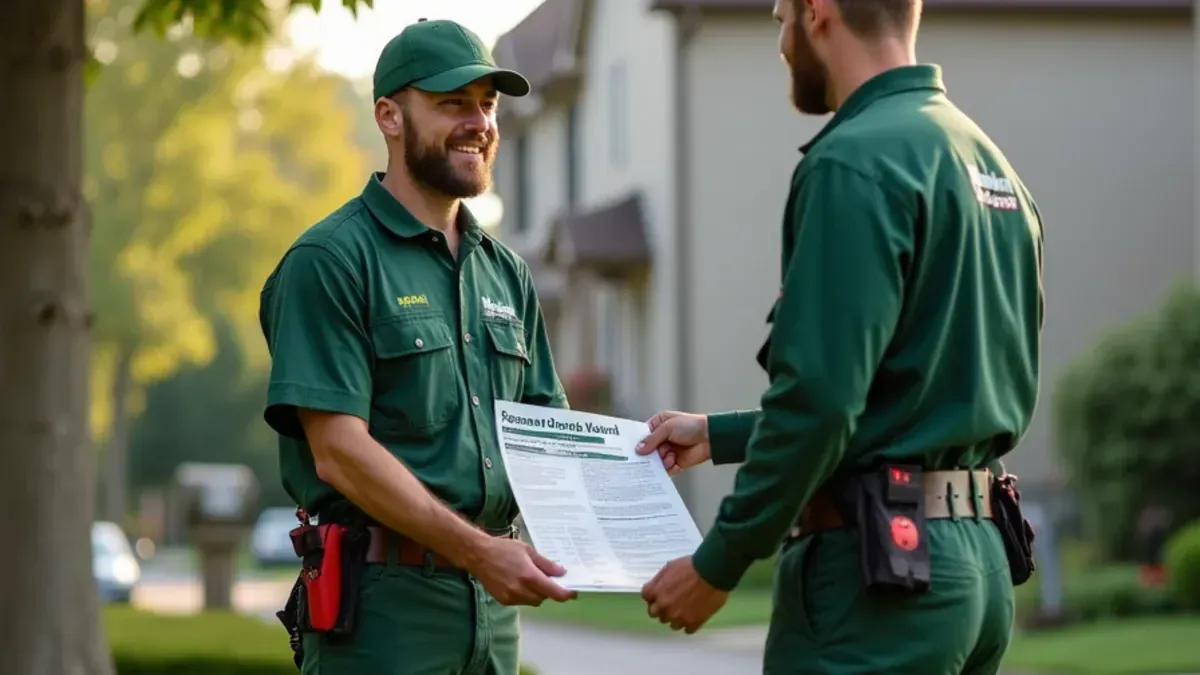
We don’t send prices off a satellite image alone. Cameron walks the property, measures the turf, notes weed pressure and bare areas, and asks how you use the yard. On larger lots like many we see for lawn care in Fishers, that visit is often where we find the aeration or shade problem that explains why past programs didn’t work.
Many customers combine a treatment program with weekly mowing through our residential lawn care plans, which keeps mowing height and application timing working together instead of against each other.
From our crew's experience
How We Think About Program Value
The cheapest program on paper is often the one that drops the two fall rounds. We see it every year: a homeowner pays for spring and summer, the lawn looks fine in August, and the plan gets cancelled right before the September and November feedings that build roots for next season. If a budget forces a cut, we would rather trim a summer round than lose fall.
A few other tradeoffs we weigh on Speedway and Indy lawns:
- Spring seeding and pre-emergent don’t mix. Most crabgrass preventers also stop grass seed from sprouting, so a lawn we plan to patch in April gets a different first round.
- Shade changes the summer plan. Fine fescue under maples skips feeding once temperatures pass 85°F, which can mean one fewer round and a smaller bill.
- Grub control is a judgment call. A lawn with past grub damage or skunks digging earns a preventive round; a clean lawn can often wait and be checked in late summer.
A DIY program is reasonable on a small, healthy lawn if you will follow soil temperature rather than the calendar. It gets expensive when weeds already have the upper hand, because missed timing turns into a second season of weed work and, often, a seed bill on top of it.
FAQ
Common Questions
Is a six-application lawn program worth it in Indiana?
For most cool-season lawns, yes. Six rounds let pre-emergent, weed control and fertilizer each land at the right soil temperature, including the fall feedings that matter most for roots. Four-round plans can work for low-maintenance lawns, but they usually skip either summer grub protection or the late-fall feeding.
Do lawn care companies charge per application or per year?
Both are common. Many central Indiana providers bill after each visit, while others spread an annual total into monthly payments. The total cost for the season is usually similar either way. What matters is that the agreement lists each round, what it contains, and what happens if weather pushes a visit back.
Why did my quote come in higher than the area average?
Usually it comes down to more treated turf than expected, heavy weed or crabgrass pressure, or add-ons such as grub control and aeration bundled into the price. Ask for an itemized quote. You should be able to see the square footage, the number of rounds and every add-on as separate lines.
How much does a single lawn fertilizer application cost in Indianapolis?
Area ranges for one treatment application around Indianapolis commonly fall between $70 and $105 for a typical suburban lawn. Small city lots tend to land near the low end, while large lots or heavy weed pressure push toward the top. Most full-season program prices are built up from that per-round figure.
The Bottom Line
A fair full-season program in central Indiana generally costs a few hundred dollars a year for an average lawn, with the final number driven by treated area, starting condition and add-ons. The better question than “how much” is “what goes down, and when.”
If you would like a straight answer for your own yard, Speedway Lawn Maintenance will measure the lawn, explain each round and send a written quote. Text or call 1-323-606-0255 to set up a walk-through.