Checklist
Emergency Snow Removal in Indianapolis: How to Prep for Winter
By Speedway Lawn Maintenance, LLC 5 min read
The short answer
The best way to get emergency snow removal in Indianapolis is to arrange it before the storm. Sign a per-push, per-event or seasonal agreement in October or November, set a trigger depth, stake your driveway edges before the ground freezes, and choose an ice melt that won’t scale concrete or burn the lawn.
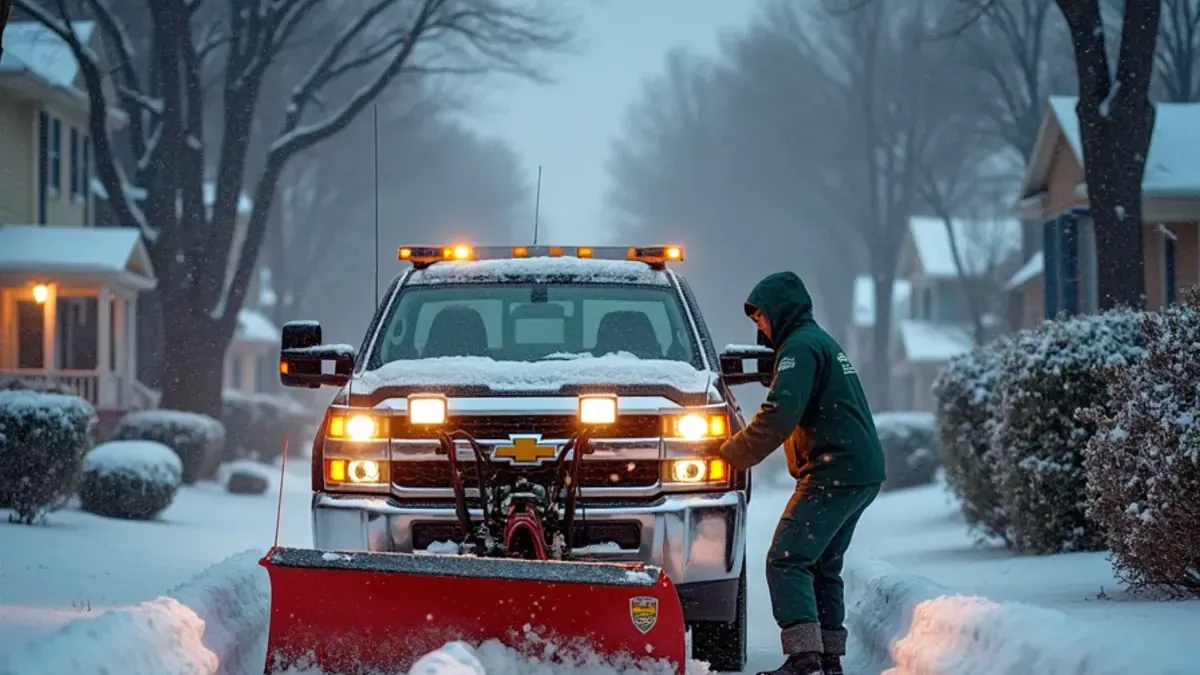
Emergency snow removal in Indianapolis is hardest to get exactly when you need it most. When a storm drops several inches overnight, contractors are already working through their contract lists, and a first-time call can wait hours or more. The homeowners and property managers who get cleared quickly almost always set things up in the fall.
Indianapolis averages roughly 25 inches of snow a season, but the bigger hazard is ice: freezing rain, freeze-thaw cycles and refrozen melt on walks and steps. This checklist covers what to line up before winter, how to choose an ice melt that won’t wreck your concrete or lawn, and how to handle salt damage in spring.
Lock In a Pre-Season Agreement
Most contractors build their winter routes in October and November. Customers with a signed agreement are on the route; everyone else is fit in around them. Here is what a solid agreement should answer.
- Pricing model: per push, per event or a seasonal flat rate. Per push suits light winters; seasonal gives budget certainty.
- Trigger depth: the snowfall that starts service. Residential driveways are commonly 2 inches; walks, steps and commercial entrances are often lower.
- What’s included: driveway, public sidewalk, front walk, steps, mailbox approach, and whether ice melt is applied or billed separately.
- Timing expectations: whether service begins during the storm or after it ends, and how long a typical route takes.
- Damage policy: how turf scrapes or bed damage along edges are handled in spring.
Our snow and ice removal service covers residential driveways and walks, and business owners can add winter work to a commercial lawn care agreement so one contact handles the property year-round.
Stake and Mark Before the Ground Freezes
Under six inches of snow, a driveway edge, a curb and a flower bed all look the same to a plow or blower. Markers prevent most spring repair bills. Install them in late October or November, while the soil is still soft enough to push stakes in.
- Use reflective fiberglass driveway stakes, about four feet tall.
- Set them on the lawn side of the driveway edge, a few inches off the pavement, every 10–15 feet and at every curve.
- Mark sprinkler heads near hard surfaces, low landscape lights, and bed corners that sit close to walks.
- Flag fire hydrants and mailbox posts so they stay visible and reachable.
- Move garden hoses, decorations and anything else that will vanish under drifting snow.
Choosing an Ice Melt: Concrete, Turf and Pets
Not all ice melt is the same. Each product has a practical working temperature, and each carries some risk to concrete, plants or both. Temperatures below are approximate practical limits, not the lowest numbers printed on the bag.
| Product | Works down to about | Concrete | Turf & plants |
|---|---|---|---|
| Sodium chloride (rock salt) | 15–20°F | Worsens freeze-thaw scaling | Highest risk to grass and soil |
| Calcium chloride | -20°F | Moderate; can leave slick residue | Moderate when used sparingly |
| Magnesium chloride | 0 to 5°F | Gentler than rock salt | Lower risk |
| Potassium chloride | 20–25°F | Mild | Lower risk, but weak in hard cold |
| Calcium magnesium acetate (CMA) | 20°F | Gentlest option | Low risk; costs the most |
A few rules apply to every product. Shovel or plow first, then use ice melt to break the bond, not to melt the whole snowpack. Spread it thinly — a handful covers far more area than most people think. Keep all chloride products off concrete poured within the last year, which is especially prone to surface scaling. On very cold days, sand gives traction where no melt will work.
Salt Damage on Lawns and How to Fix It
Brown, dead strips along the driveway and sidewalk every March are usually salt, not winter kill. Sodium builds up in the soil, pulls water away from roots and breaks down clay structure along the pavement edge.
- Pile plowed snow away from lawn edges and beds when you can.
- In early spring, soak damaged strips with an inch or more of water over several days to flush salt below the root zone.
- Gypsum helps here, unlike on most Indiana clay, because it replaces sodium in salt-affected soil.
- Rake out dead grass and reseed with tall fescue or perennial ryegrass once soil temperatures rise.
If the damage is wider than a few feet, or it’s mixed with plow scrapes and vole trails, our freeze damage recovery service handles the repair seeding in spring.
What “Emergency” Looks Like in Indianapolis
Across Indianapolis and Marion County, the true emergencies tend to be ice storms and heavy wet snow followed by a hard freeze. That sequence turns an unplowed driveway into a sheet of ice that no melt clears quickly. Early clearing before a freeze matters more than the snow total.
If you end up calling after a storm without an agreement, be ready with your address, what needs clearing, any hazards such as a steep grade, and a photo if you can text one. It helps the contractor judge whether they can fit you in and what equipment to bring.
From our crew's experience
How a Storm Night Really Runs
On a snow night, route order is everything. Contract customers go first, starting with steep drives and anyone who has told us about a medical need or an early shift. One-time calls get fit in afterward, as crews allow. That is not a sales pitch for contracts; it is simply how every snow operation around Indianapolis has to work when the phones light up at 5 a.m.
The tradeoff we weigh most is clearing during the storm versus after it. On a long, heavy event, a mid-storm push keeps depth manageable and stops tires from packing the drive into ice ridges. On a light, dry snow, waiting until it ends saves you a second visit.
- Driving on it first. Tire tracks freeze into ruts that no blower lifts and that take far more melt to break.
- Skipping pre-treatment before freezing rain. A light application ahead of an ice event stops the bond and uses less product than chipping afterward.
- Piling snow on the same lawn strip all winter. That spot collects the most salt and is where gray snow mold shows up in March.
A short driveway under four inches of dry snow is a fair job for a shovel or small blower. Call a crew for heavy wet snow, ice, long or steep drives, health concerns, or when you will be away.
FAQ
Common Questions
When should I sign a snow removal contract in Indianapolis?
October through mid-November is ideal. That is when contractors set their routes, order ice melt and decide how many accounts they can take. Waiting until the first forecast of heavy snow often means limited openings, and some contractors stop adding customers once routes are full.
What is a typical trigger depth for residential snow removal?
Two inches is the most common trigger for residential driveways in central Indiana. Some agreements use one inch for walks and steps, or offer a lower trigger for customers who leave early for work or have mobility concerns. Commercial entrances often use a zero-tolerance standard where any accumulation or ice gets treated.
Which ice melt is safest for pets and lawns?
Calcium magnesium acetate and magnesium chloride are generally gentler on paws, turf and concrete than rock salt. Products marketed as pet-safe are often one of these. Whatever you use, spread it thinly after shoveling, wipe pets’ paws after walks, and keep melt off new concrete and away from lawn edges.
Can I get snow removal in Indianapolis without a contract?
Sometimes, depending on the storm. Contract customers are cleared first and one-time calls are fit in as crews allow. Text your address, what needs clearing and a photo to 1-323-606-0255. After a light snow, openings come sooner; after a major storm or an ice event, expect a longer wait.
The Bottom Line
Winter goes much more smoothly when the agreement is signed, the stakes are in and the right ice melt is on hand before the first storm. Those three steps protect your time, your concrete and your lawn.
Speedway Lawn Maintenance is booking snow and ice service for the coming season around Speedway and Indianapolis. Call or text 1-323-606-0255 to talk through your property and get on the route before winter arrives.