Seasonal Guide
Storm Cleanup After Indiana Thunderstorms: What to Do First
By Speedway Lawn Maintenance, LLC 5 min read
The short answer
After an Indiana thunderstorm, clean up in this order: stay clear of downed wires and report them, photograph the damage for insurance before moving anything, sort out what belongs to the utility or an arborist, then clear ground-level limbs and leaves from the lawn within a few days so the grass underneath doesn’t yellow and thin.
Central Indiana’s severe-weather season runs roughly April through July, and a single line of thunderstorms or a derecho can drop more limbs in ten minutes than a yard sees in a decade. Storm debris cleanup in Indiana goes best when it follows a set order: safety first, documentation second, and only then the chainsaw and rake.
This guide walks through that order the way our crew approaches a post-storm call. It also draws a clear line between what a homeowner or a storm cleanup crew should handle and what belongs to the utility company or a certified arborist.
Step One: Walk the Property Before Touching Anything
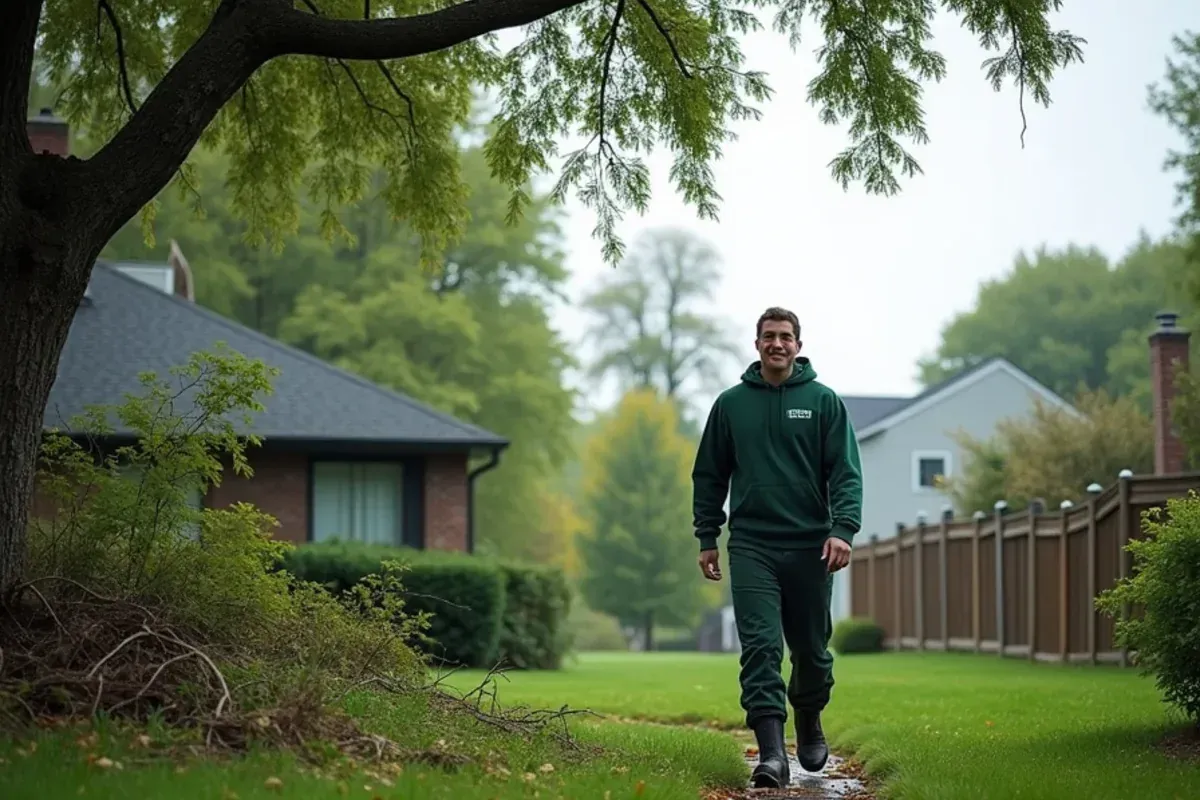
Wait until the storm has fully passed and lightning has stopped. Then make one slow lap of the property, looking up as much as down. Most storm injuries happen in the first hour, when people rush outside to start dragging branches.
- Downed or sagging power lines: assume every wire is energized, including cable and phone lines that may be touching a power line. Stay at least 35 feet away, keep kids and pets inside, and report it to AES Indiana, Duke Energy or your REMC. Never move a limb that is touching a wire.
- Hanging limbs: broken branches caught high in the canopy (arborists call them “widowmakers”) can fall without warning. Keep everyone out from underneath.
- Trees leaning on the house or roots lifting soil: a tree that shifted in saturated clay can keep moving. Call a certified arborist.
- Gas smell near a toppled tree: uprooted root plates can tear service lines. Leave the area and call your gas utility.
Step Two: Photograph Everything for Insurance
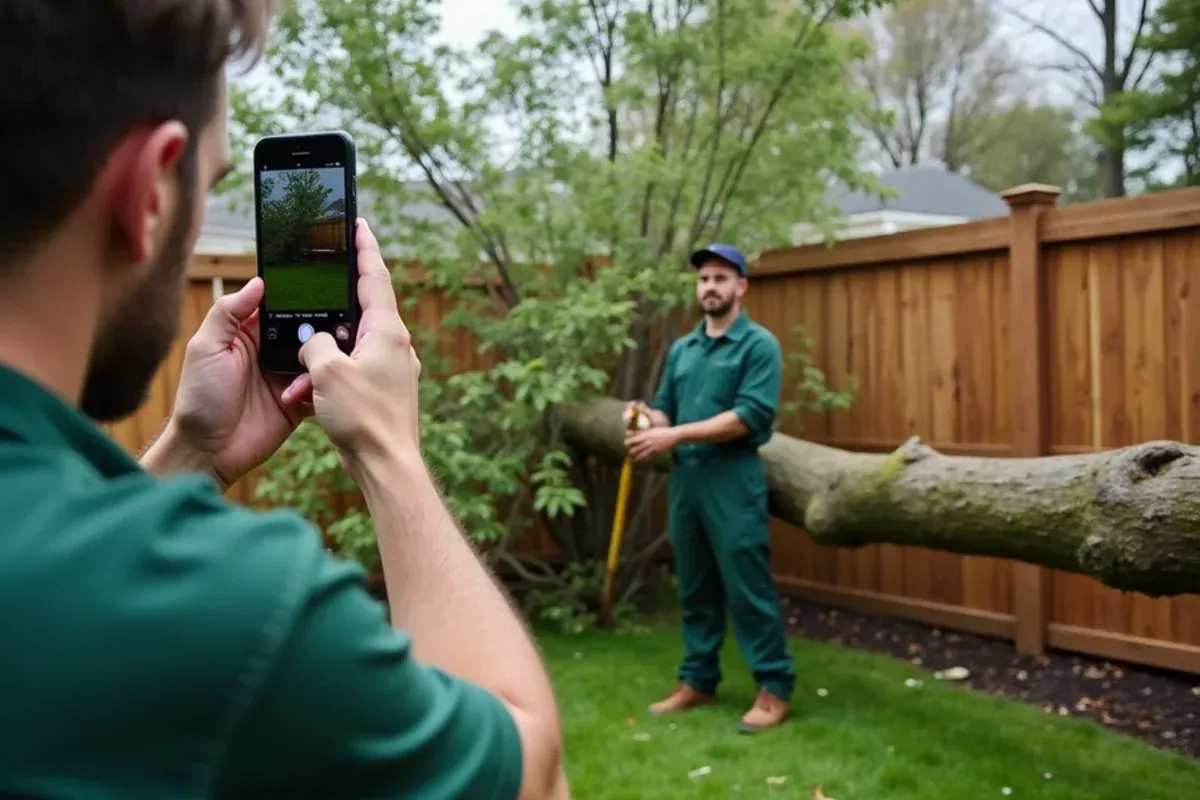
Before a single branch moves, document the scene. Adjusters want to see debris where it landed, and once it is stacked at the curb that evidence is gone.
- Take wide shots from each corner of the house showing the overall debris field.
- Photograph any contact points: limbs on the roof, gutters, fence, vehicles or the AC unit.
- Get close-ups of broken fence panels, dented siding and torn screens.
- Record a short video walk-through with the date spoken aloud or visible on screen.
- Keep receipts for any emergency work, including tarping and debris removal.
Many homeowner policies cover debris removal only when a tree damages a covered structure, and often with a cap. Call your agent before assuming either way. Good photos make that conversation much shorter.
Step Three: Sort the Damage and Call the Right People
Once the property is safe and documented, sort the mess into three categories. This is exactly how we triage a job when a homeowner texts us photos the morning after.
| What you see | Who handles it | How urgent |
|---|---|---|
| Wire down or tree touching a line | Utility company only | Immediately; stay clear |
| Hanging limbs, split trunks, tree on the roof | Certified arborist | Same day if over the house |
| Limbs under 6 inches on the ground, scattered sticks | Homeowner or lawn crew | Within a few days |
| Leaves, shingles, siding bits in the turf | Homeowner or lawn crew | Within a few days |
| Ruts, scalped patches, flattened beds | Lawn crew | After the ground dries |
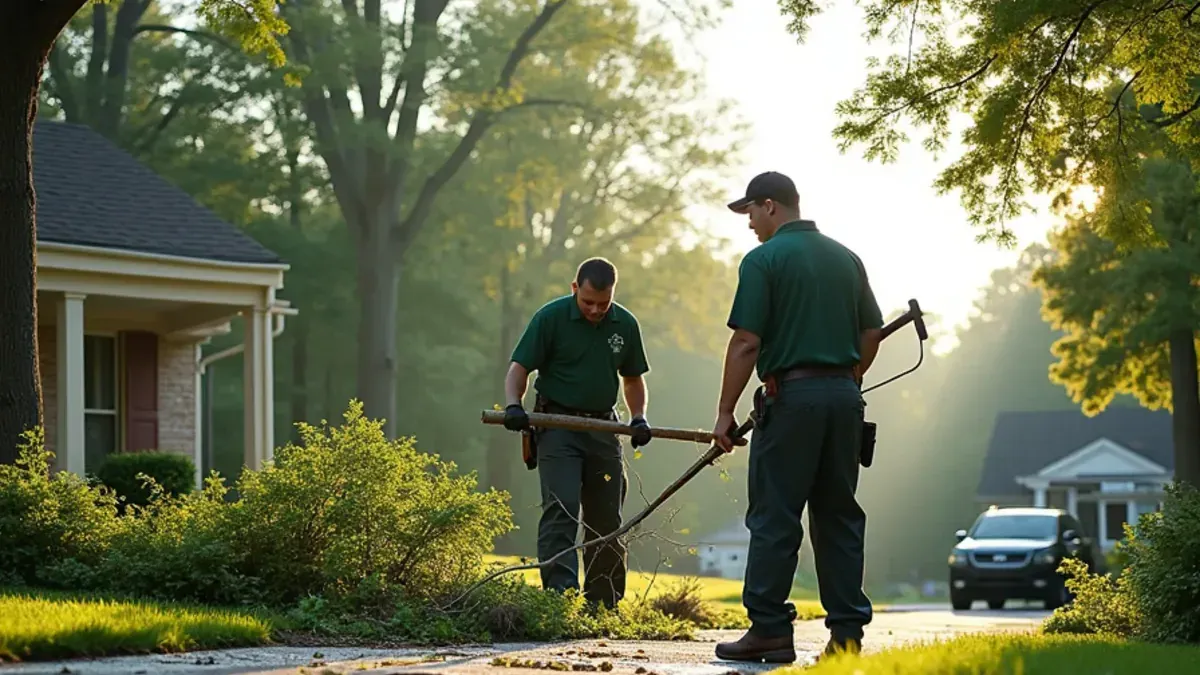
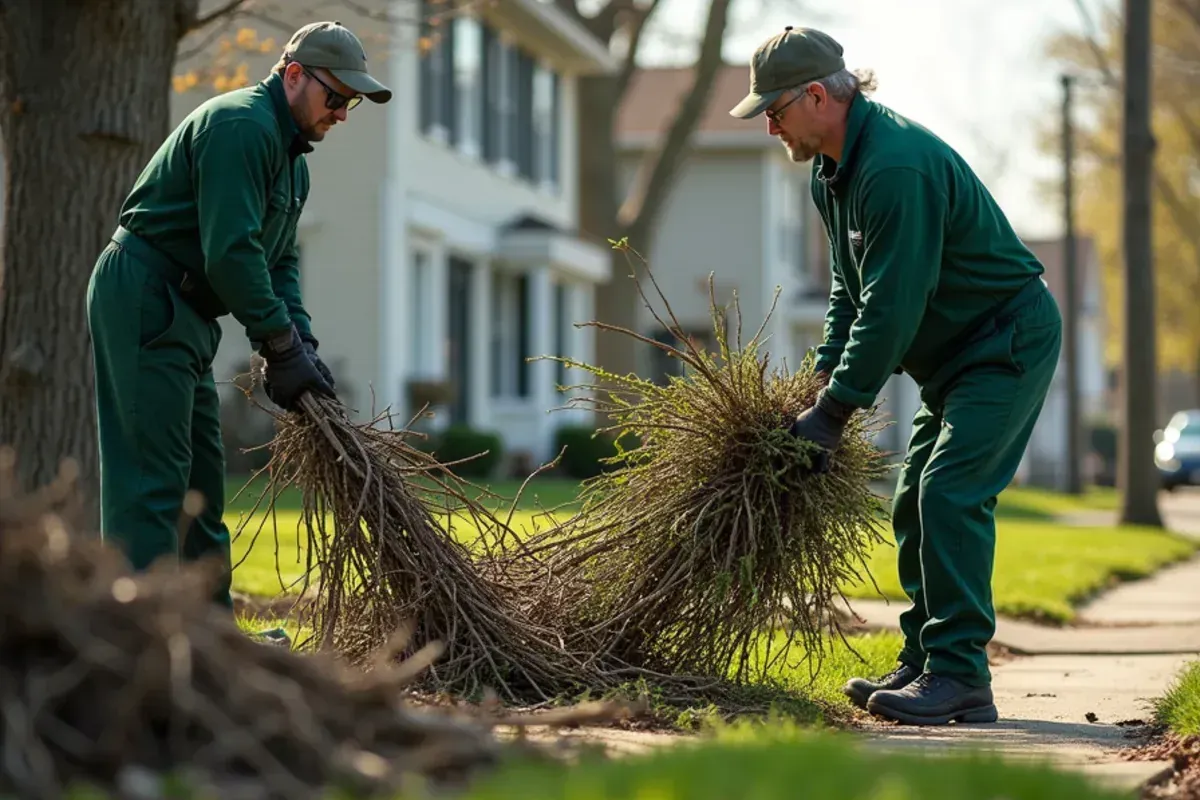
The ground-level work is where a yard cleanup crew earns its keep. We cut downed limbs into manageable lengths, haul brush, rake and blow out small debris, and clear beds so shrubs can stand back up.
Why Debris Should Not Sit on the Lawn
It is tempting to leave branches for a week and deal with them later. In June and July, that costs you grass. A pile of limbs and wet leaves blocks light and traps heat, and cool-season turf underneath can yellow within days and thin out in about a week.
Watch for hidden hazards in the grass
Wind scatters roofing nails, glass and siding fragments across the yard. Walk the lawn in a grid before the first mow; a mower blade turns a hidden nail into a projectile.
Stay off saturated clay
Central Indiana clay turns to putty after a heavy storm. Driving a truck or even a loaded wheelbarrow across it leaves ruts that can last all season. When we can, we carry debris out along driveways and sidewalks and wait a day for soft areas to firm up.
Repairing the Lawn After Cleanup
- Rake out flattened or matted areas so the turf can dry and stand up.
- Rake ruts level once the soil is moist but not sticky; top-dress deeper ones with a soil and compost mix.
- Skip the first mow until debris is fully cleared and the grass has had a day to recover.
- Mark bare patches for fall, then repair them with core aeration and overseeding during the late-August to mid-September seeding window.
Hendricks County suburbs take the brunt of many storm lines rolling in from the west, and newer subdivisions there often pair young trees that snap easily with heavy clay that stays wet for days. That is why so much of our storm cleanup in Plainfield and yard recovery work in Brownsburg ends with lawn repair. The same sequence applies anywhere in central Indiana.
From our crew's experience
What Our Crew Weighs on a Post-Storm Job
Most storm calls we take start with a text and a few photos, which let us sort the job before anyone drives over. If a limb is hung up in the canopy or resting on a line, we tell you so and point you to an arborist or the utility first, because we work from the ground.
On the ground, the real judgment call is speed versus turf. Getting limbs off the grass quickly protects it, but dragging loaded tarps across wet clay the day after a two-inch rain leaves ruts that outlast the storm. We carry heavy wood out along the driveway and walks, and leave soft low spots until they firm up.
- Brush stacked on the lawn for pickup. By the time the truck comes, it has killed a rectangle of grass. Stack on pavement where your town’s rules allow.
- Mowing before a nail sweep. Roofing nails and siding shards hide in tall grass after a wind event.
- Cutting a bent limb from the wrong side. Wood under tension can spring back or pinch the saw.
Raking sticks and hauling a few small limbs is a reasonable weekend job. Call a crew when there are many limbs over four inches thick, more brush than curbside pickup will take, or beds and turf that need repair once the wood is gone.
FAQ
Common Questions
Will the city pick up storm debris?
Sometimes. After major events, Indianapolis and many suburbs announce special brush collection, but rules vary by town and storm. Branches usually must be cut to set lengths and bundled at the curb. Check your town’s public works page or social media before stacking, since placing debris in the right spot and format avoids missed pickups.
Can you remove a whole tree that fell in the storm?
We handle limbs and brush on the ground, hauling and lawn repair. A whole downed tree, anything leaning on a structure, or anything near a power line should go to a certified arborist with the right equipment and insurance. We are glad to coordinate so your yard cleanup happens right after the tree work.
How soon after a storm should debris be cleared?
Hazards come first, of course, but aim to get limbs and leaf piles off the turf within three to five days during warm months. Cool-season grass smothered under debris in summer heat can yellow within days and thin out after a week. In spring or fall you have a little more time.
Does homeowners insurance pay for storm cleanup in the yard?
It depends on the policy and what the debris hit. Many policies pay for removal only when a tree damages a covered structure, often up to a set cap. Limbs that simply landed in the grass are frequently not covered. Photograph everything first and ask your agent before work starts.
The Bottom Line
Safety, photos, triage, then cleanup. Following that order keeps people out of harm’s way, protects your insurance claim and gives the lawn the best chance of bouncing back before fall seeding season.
When the dangerous work is handled and you need the ground-level mess cleared, Speedway Lawn Maintenance can haul limbs, clean beds and repair turf across the west side and beyond. Text or call 1-323-606-0255 with a few photos for a quick quote.