Seasonal Guide
Crabgrass & Dandelions: A Central Indiana Weed Control Calendar
By Speedway Lawn Maintenance, LLC 6 min read
The short answer
In central Indiana, put crabgrass pre-emergent down in early to mid April, before soil holds near 55°F (forsythia bloom is the cue), with an optional booster in late May. Spot-treat in summer instead of blanket spraying, and save the main dandelion, clover and creeping Charlie treatment for mid-September through October.
Most weed problems in central Indiana are really timing problems. Any lawn weed control calendar Indiana homeowners follow has two anchor dates that matter more than any product choice: the spring window when crabgrass seed starts to germinate, and the fall window when perennial broadleaf weeds pull nutrients down into their roots. Hit those two and the rest of the year becomes light maintenance.
Miss them and you end up spraying the same dandelions every May and watching crabgrass take over the driveway strip by July. The calendar below follows soil temperature and plant biology rather than fixed dates.
The Year at a Glance
| Window | Main target | What happens |
|---|---|---|
| March | Winter annuals (henbit, chickweed) | Spot-treat on mild days above 50°F; mostly a clean-up job |
| Early–mid April | Crabgrass, foxtail | Pre-emergent down before soil holds near 55°F |
| Late May–early June | Crabgrass (second barrier) | Optional split application to extend control into summer |
| May–June | Dandelion flush, clover | Spot-treat actively growing weeds; no need to blanket the lawn |
| July–August | Nutsedge, spurge, escaped crabgrass | Targeted products only; avoid broadcast spraying in heat |
| Mid-Sept–October | Dandelion, clover, creeping Charlie, plantain, violets | Main broadleaf application of the year |
| Late Oct–early Nov | Stubborn perennials | Follow-up pass while weeds are still green |
That list looks busy, but most lawns need only three or four real applications. The other entries are checkpoints where someone walks the lawn and decides whether anything needs doing, which is a big part of what our lawn weed control service actually is.
Crabgrass: The Race Against Soil Temperature
Crabgrass is a summer annual. It dies with the first hard frost and comes back from seed every spring, which means the whole game is stopping those seeds from establishing. Pre-emergent products (prodiamine, dithiopyr and pendimethalin are the common active ingredients) form a barrier in the top layer of soil that kills seedlings as they sprout.
The barrier has to be in place before soil temperatures hold around 55°F at a couple of inches deep. Around Indianapolis that usually lands in early to mid April, and the forsythia is a reliable signal: when the yellow blooms are at their peak, it is time. Water it in with about half an inch of rain or irrigation.
Why we often split the application
A single spring dose can run thin by July, especially in a wet year. Splitting the rate into an April application and a late May booster keeps the barrier strong through the hottest weeks, when crabgrass along sidewalks and driveway edges is most aggressive.
Dandelions, Clover and Creeping Charlie Belong to Fall
Dandelions get sprayed in spring because that is when they are obvious. In spring, perennial weeds are pushing energy upward into flowers and leaves, so herbicide never reaches the root in a lethal dose. In fall the flow reverses. Plants are moving sugars down into the roots to survive winter, and a broadleaf herbicide rides along with them.
- Dandelion and plantain: a standard three-way broadleaf product in mid-September to October clears most of them.
- White clover: responds well in fall, though it often signals low nitrogen, so pair control with a proper lawn fertilization schedule.
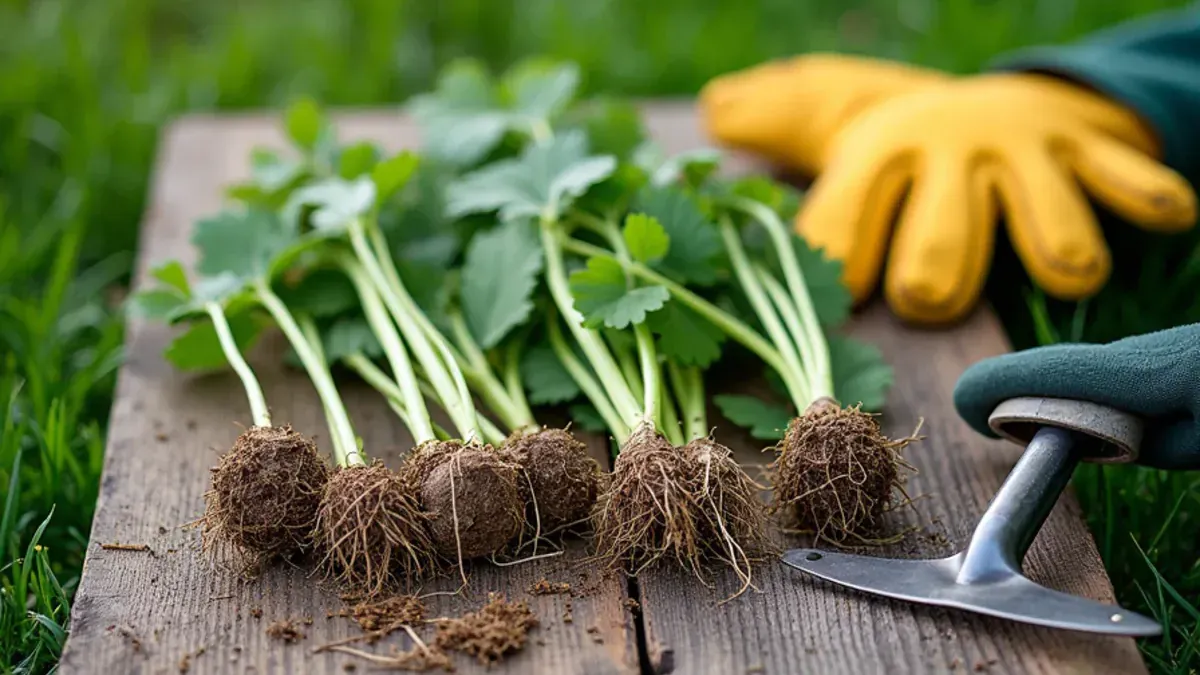
- Creeping Charlie (ground ivy): needs a product with triclopyr or similar, and usually two fall applications about three weeks apart.
- Wild violets: the toughest of the group; expect partial control each year rather than a one-and-done fix.
Broadleaf applications still work after the first light frost as long as daytime temperatures reach the 50s and weeds are green. Purdue Turfgrass has long pointed to this fall window as the most effective time for perennial broadleaf control in Indiana.
Summer: Spot-Treat, Don't Blanket
From July through August, the rule is restraint. Many herbicide labels warn against application above the mid-80s because of turf injury and drift, and a lawn stressed by heat and dry clay does not need another stressor. Instead, target specific problems:
- Yellow nutsedge in low, wet spots needs a sedge-specific product; standard broadleaf mixes will not touch it.
- Prostrate spurge shows up in thin, hot areas along walks and can be spot-treated or pulled.
- Escaped crabgrass can be knocked back with a post-emergent labeled for it, but it gets harder once it tillers.
Every product we use goes down per its label and Indiana State Chemist (OISC) rules, which matters most in summer heat and wind.
What the Calendar Looks Like in Avon
West-side suburbs make a good case study. Many newer subdivisions in Avon, where we handle weekly lawn care, sit on graded clay fill with a thin layer of topsoil. Turf there tends to be thin along curbs and driveway edges, and that is exactly where crabgrass wins. On those lawns the split pre-emergent is less optional, and the fall broadleaf pass does more good when it follows core aeration and overseeding that thickens the stand.
Dense turf mowed at 3–4 inches shades the soil and leaves weed seed nowhere to land. Every calendar entry above works better on a thick lawn and fights uphill on a thin one.
From our crew's experience
Why Weeds Keep Winning on Some Speedway Lawns
Before anything gets sprayed, we identify the weed. A lot of June calls about crabgrass turn out to be nimblewill, quackgrass or clumps of coarse tall fescue. Those are perennials, so a spring pre-emergent does nothing to them, and treating the wrong target is the most common reason a program seems to fail.
The second thing we read is what the weed says about the lawn. Creeping Charlie loves the damp, shaded north side under old Speedway maples. Knotweed and plantain follow compacted paths. Clover points to low nitrogen, and nutsedge marks a wet spot. Spraying without fixing the cause buys you a single season.
- Mowing at two inches. Short turf lets sunlight reach crabgrass seed along the curb strip.
- Mowing right after a broadleaf spray. Give the product the time the label asks before cutting.
- Treating in spring and skipping fall. The dandelions come back from the root every May.
Elane J. wrote that Cameron “saved my yard from a weed overtaking,” and that job was mostly this: right target, right window, then thicker turf. An April pre-emergent and some hand-pulling is a fine DIY routine. Call when creeping Charlie or violets have spread, or weeds cover a large share of the yard.
FAQ
Common Questions
What is the best month to apply crabgrass preventer in Indiana?
For most of central Indiana, early to mid April. The real trigger is soil temperature holding near 55°F, which usually lines up with forsythia bloom. In a warm spring that can arrive in late March; in a cold one, closer to late April. Applying a few weeks early is safer than a few days late, because the barrier cannot stop seedlings already up.
Can I seed and use weed control at the same time?
Mostly no. Standard crabgrass pre-emergents block grass seed too, and fresh broadleaf herbicides can injure new seedlings. There are seed-safe pre-emergents labeled for new seedings, but the simpler plan is to seed in late summer and hold weed control on those areas until the new grass has been mowed a few times.
Why do my dandelions come back every year after spraying?
Usually because the spraying happens in spring, when the herbicide does not reach the root in a lethal dose. The top dies, the root survives, and it regrows. Moving the main broadleaf treatment to mid-September through October, then keeping the turf thick with good mowing height, breaks that cycle within a season or two.
Is nimblewill the same as crabgrass?
No. Nimblewill is a perennial grass that spreads through thin, shaded lawns and turns tan early in fall, while crabgrass is an annual that dies at the first hard frost. A spring pre-emergent will not stop nimblewill. It takes a selective product labeled for it or spot renovation, plus thicker turf.
The Bottom Line
A weed-free Indiana lawn comes from two well-timed windows and a lot of patience in between: crabgrass pre-emergent before soil warms in April, and broadleaf control in fall when the weeds are sending energy down to the roots. Summer is for spot work and keeping the turf healthy enough to crowd weeds out.
If you would like someone watching soil temperatures and the forecast for you, Speedway Lawn Maintenance builds weed control into seasonal programs across the west side and Hendricks County. Call or text 1-323-606-0255 to have Cameron take a look at what is growing in your yard.