Local Guide
Why Indiana Clay Soil Kills Lawns — and How Core Aeration Fixes It
By Speedway Lawn Maintenance, LLC 6 min read
The short answer
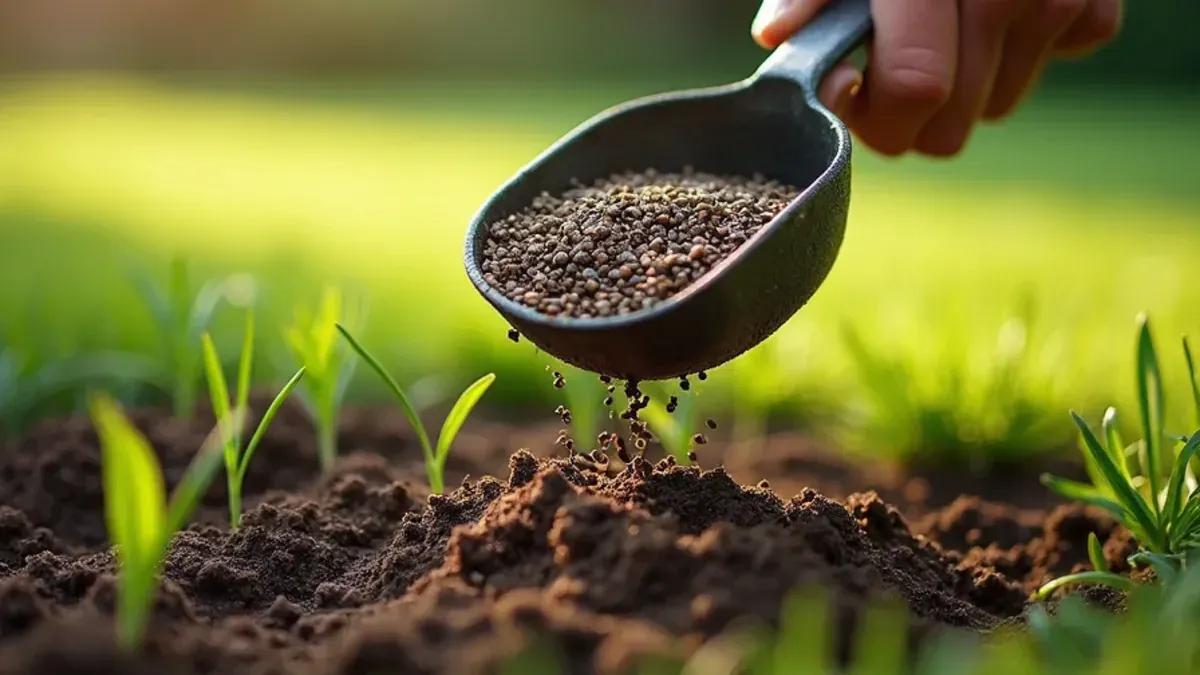
Core aeration helps Indiana clay lawns by pulling plugs two to three inches deep, which lets air, water and roots into soil that compaction has sealed. Schedule it in fall, paired with overseeding during the August 15 – September 15 window, and water ahead if the clay is dry. It relieves compaction; it doesn’t change the clay itself.
Most struggling lawns our crew sees in central Indiana are not short on fertilizer or seed. They are short on air. Clay soil lawn aeration in Indiana is often the single biggest fix for a yard that puddles after every storm, browns out first in July and never seems to thicken no matter what goes on it.
This guide explains what our heavy glacial-till clay does to grass roots, how to tell whether your lawn is compacted, how core aeration actually helps, and the timing that gets the most out of it. It also covers a couple of popular clay fixes that do very little.
What Glacial Clay Does Below the Surface
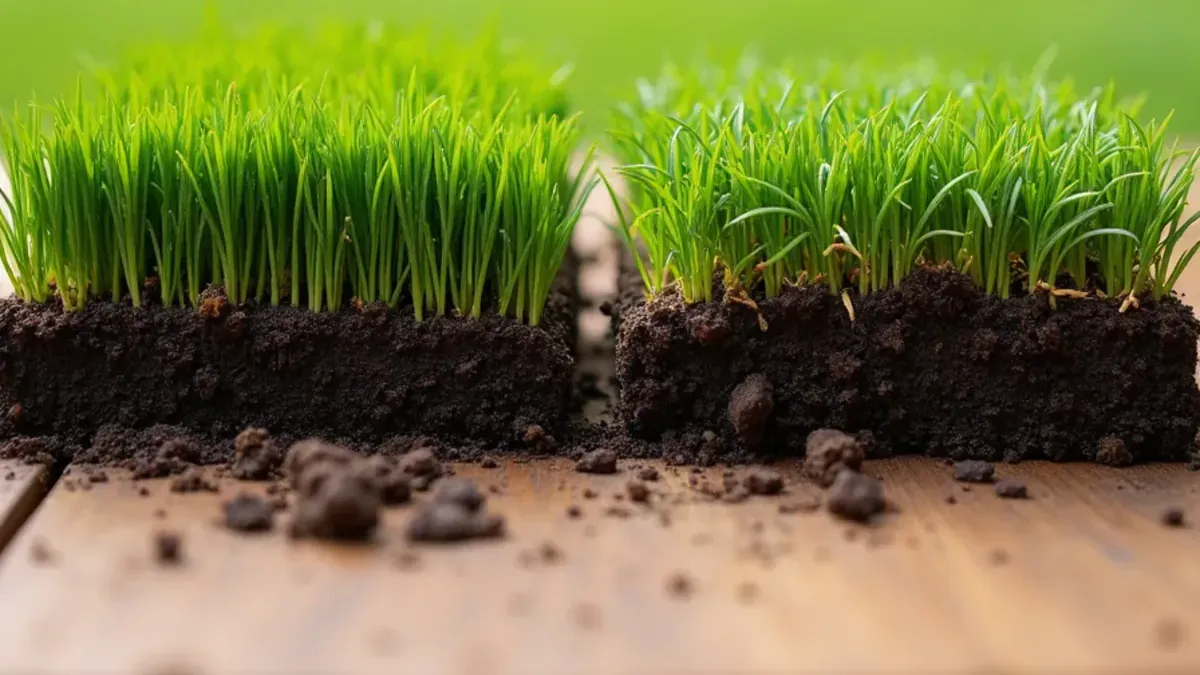
Glaciers left most of central Indiana with fine-textured clay loam and clay. Clay particles are tiny and flat, so they pack tightly and leave little pore space. When foot traffic, mowers and rain press them together, those pores collapse further. Roots need oxygen as much as water, and in compacted clay they get neither for long.
Subdivisions make it worse. During construction, topsoil is often stripped, the lot is graded with subsoil, heavy equipment runs over it for months, and a few inches of topsoil — or just sod — goes back on top. The result is a hard layer a few inches down that roots refuse to cross.
- Rain runs off instead of soaking in, so the lawn dries out fast despite a wet spring.
- Water that does get in sits on top of the hardpan, drowning roots in low spots.
- Roots stay in the top two inches, which is exactly the layer that bakes in August.
- Fertilizer and seed wash toward the curb instead of reaching the root zone.
Signs Your Clay Lawn Is Compacted
Before we recommend aeration, we check. You can run the same tests in ten minutes.
| What you notice | What it usually means |
|---|---|
| A long screwdriver won’t push 4–6 inches into moist soil | A compacted layer close to the surface |
| Puddles still standing a day after an inch of rain | Poor infiltration, often over graded subsoil |
| Worn, thin grass along paths, dog runs and mower turns | Traffic compaction concentrated in those lanes |
| Prostrate knotweed, plantain or goosegrass moving in | Weeds that thrive where turf roots can’t |
| Lawn wilts days before the neighbor’s does | Shallow roots with no reserve of deeper moisture |
How Core Aeration Opens Up Heavy Soil
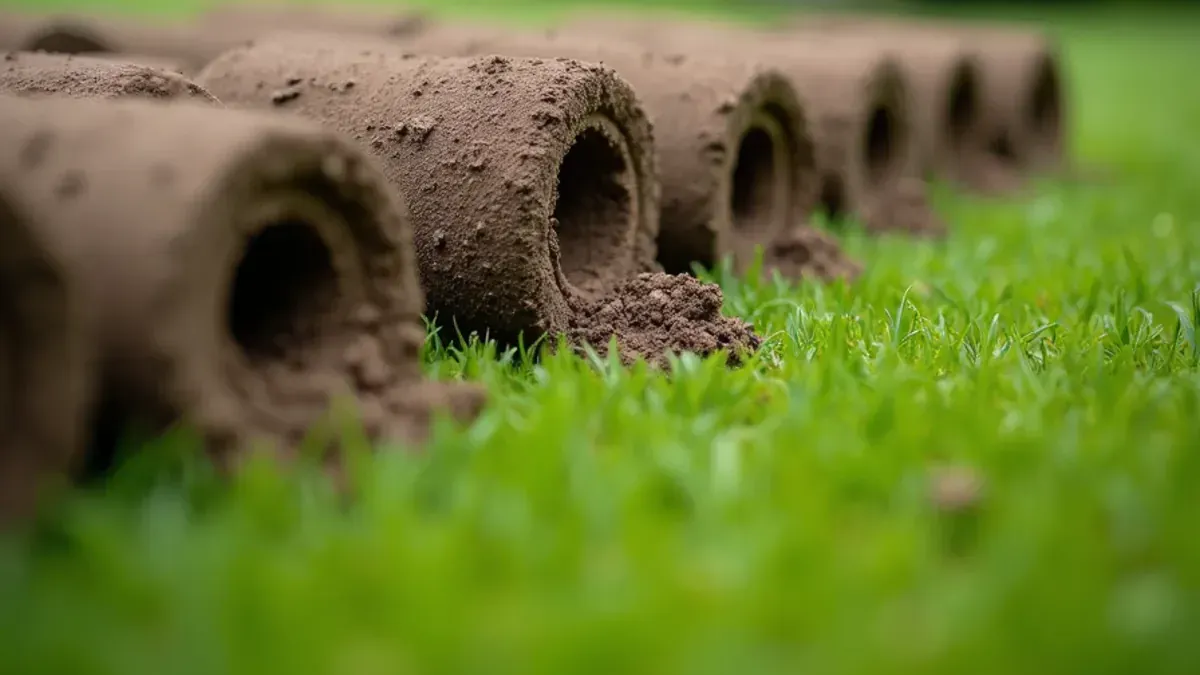
A core aerator pulls plugs of soil roughly half an inch wide and two to three inches deep, spaced a few inches apart. Each hole is a channel for air, water and nutrients, and the soil around it has room to relax. Roots follow those channels down, and over a few seasons the lawn builds a deeper, denser root system.
The plugs stay on the lawn. They look messy for a week or two, then break down with rain and mowing, and the microbes in them help decompose thatch. Our core aeration and overseeding service runs two passes in different directions on clay, because one pass rarely opens enough of the surface to matter.
Core versus spike aeration
Spike aerators and spiked sandals punch holes without removing soil. On clay, that pushes particles sideways and can compact the walls of each hole. If the machine isn’t pulling plugs, it isn’t relieving compaction.
What aeration won’t do
Aeration doesn’t turn clay into loam. The lasting improvement comes from repeated aeration plus organic matter: grass roots, returned clippings and, where it’s practical, a quarter inch of screened compost raked into the holes. Gypsum is often sold as a clay fix, but research from Purdue and other land-grant universities shows it does little for Indiana clay unless the soil is high in sodium, as it can be along salted driveways.
When to Aerate Clay Lawns in Central Indiana
Fall is the best time to aerate cool-season lawns. From late August through mid-October, grass is actively rooting, weeds are winding down, and the holes make a perfect seedbed for overseeding. Spring aeration in April or May is a reasonable second choice for lawns that need it twice a year.
- Water about an inch a day or two ahead if it has been dry. Tines won’t penetrate baked clay, and saturated clay just smears.
- Flag sprinkler heads, shallow irrigation lines, invisible pet fence wire and landscape lighting cables.
- Aerate, then overseed thin areas the same day.
- Follow with fertilizer. Our lawn fertilization program times the September feeding so nutrients drop straight into the open cores.
Skip aeration during summer heat or drought. Pulling cores out of stressed turf opens it to further drying just when it can least afford it.
Hamilton County Subdivisions: Carmel and Fishers
Some of the hardest-packed lawns we see are in newer Hamilton County developments. Many yards we look at for lawn care in Carmel and lawn service in Fishers sit on lots that were mass-graded, then sodded over subsoil. The sod looks great for a season or two, then thins as roots hit the hard layer underneath.
For those lawns we recommend aerating every fall for the first three to five years, then stretching to every other year once the soil has loosened and the screwdriver goes in easily. Established lawns on older lots with lighter traffic often do fine on a two-year cycle from the start.
From our crew's experience
What We Check Before Aerating Clay
Aeration is the repair we recommend most on central Indiana clay, and it is also the one most often done at the wrong moment. Before a machine touches the lawn, we push a soil probe in a few spots and look at the core. Black thatch sitting over gray, sticky subsoil means the lawn needs aeration and probably seed. If the probe slides in and roots run four inches down, aeration is optional and the money may do more elsewhere.
Soil moisture decides whether the job works. Tines bounce off baked August clay and pull stubby, shallow plugs. In saturated clay they smear the hole walls, which can leave the surface tighter than before. We aim for soil that crumbles in your hand a day after a soaking rain.
- One pass and done. A rental machine run once over clay opens too little surface to matter.
- Aerating a thin lawn without seed. The open holes become a seedbed for weeds instead of grass.
- Unflagged lines. Irrigation heads, pet fence wire and lighting cable get cut when nobody marks them first.
Renting an aerator is fine for a small, established lawn with easy access. Call us for slopes, lots of irrigation, or a thin lawn that needs seed going down the same day.
FAQ
Common Questions
How often should I aerate a clay lawn in Indiana?
Newer lawns on compacted builder fill benefit from core aeration every fall for the first several years. Established clay lawns with moderate traffic usually do well every one to two years. Heavy-use areas like dog runs or play spaces may need spring and fall passes. Recheck with the screwdriver test each year and adjust.
Should I pick up the plugs after aeration?
No. Leave them where they fall. The cores break down within one to three weeks with rain and mowing, returning soil and microbes to the surface and helping break down thatch. Raking them up removes the benefit and creates extra work. Mowing over them once they dry speeds things up.
Does liquid aeration work on clay soil?
Liquid aeration products are mostly surfactants and soil conditioners. They may help water soak in a little faster, but they don’t remove soil or physically relieve compaction the way hollow tines do. On heavy central Indiana clay, we treat them as a supplement at best, not a replacement for core aeration.
The Bottom Line
Clay is not going anywhere, but a lawn growing on it doesn’t have to struggle. Regular fall core aeration, overseeding into the holes and steady organic matter will deepen roots and cut down on puddles, wilting and thin spots within a couple of seasons.
Speedway Lawn Maintenance aerates clay lawns across Indianapolis and the northern suburbs every fall. Text or call 1-323-606-0255 and we’ll check your soil and add you to this season’s aeration route.