How-To
Overseeding Cool-Season Lawns: The Best Grass Seed for Indiana Lawns
By Speedway Lawn Maintenance, LLC 6 min read
The short answer
The best grass seed for most Indiana lawns is a turf-type tall fescue blend with 5–10% Kentucky bluegrass, because it roots deep into clay and handles summer drought. Use a fine fescue shade mix under mature trees. Buy named varieties with high germination and low weed seed, and sow between August 15 and September 15.
The best grass seed for an Indiana lawn is the one matched to your sun, soil and foot traffic — and for most central Indiana yards that means a turf-type tall fescue blend, sometimes with a little Kentucky bluegrass mixed in. The cheapest bag on the shelf is rarely right, and even premium seed fails when sown in the wrong month.
Below is how our crew thinks through seed choice when we overseed lawns around Speedway and the Indianapolis suburbs: the four cool-season grasses that actually belong here, how to read a seed tag, how much to spread, and the timing Purdue Turfgrass recommends.
The Four Cool-Season Grasses That Belong in Central Indiana
Indiana sits in the transition zone, but the Indianapolis area leans cool-season. Zoysia and bermuda survive here, yet they stay brown from October to May. For a green lawn during the months you actually use it, choose from these four.
| Grass | Best spot | Strengths | Weak points |
|---|---|---|---|
| Turf-type tall fescue | Full sun to moderate shade | Deep roots, strong drought and heat tolerance, handles clay | Bunch-type, so thin spots don’t fill in on their own |
| Kentucky bluegrass | Full sun (6+ hours) | Rhizomes self-repair damage, dense, fine texture | Slow to germinate (14–30 days), needs more water and fertilizer |
| Perennial ryegrass | Sun, high-traffic areas | Sprouts in 5–10 days, good wear tolerance | Prone to gray leaf spot, weaker in drought and hard winters |
| Fine fescues | Dry shade under trees | Tolerates low light and low fertility | Poor traffic tolerance, dislikes wet clay and summer feeding |
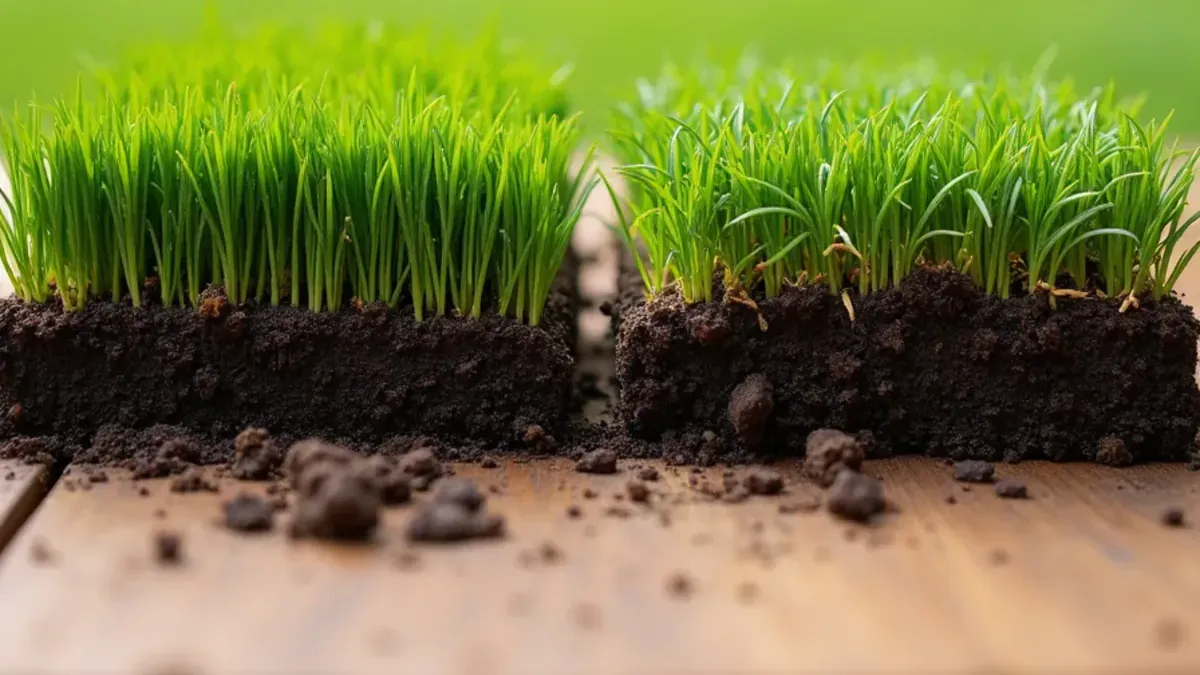
For a typical sunny suburban yard on heavy clay, we lean on a tall fescue blend with 5–10% Kentucky bluegrass. The bluegrass knits between the fescue clumps and helps the lawn recover from mower turns and dog paths. Under mature maples and oaks, a shade mix built around fine fescue and tall fescue does better than anything labelled “sun and shade” that is mostly ryegrass.
Reading the Seed Tag Before You Buy
Every bag of seed carries an analysis tag, and it tells you more than the front of the bag ever will.
- Named varieties — look for cultivar names, not just “tall fescue.” Plain “Kentucky 31” is a forage-type fescue: coarse, light green and clumpy in a lawn.
- Germination rate of 85% or better, with a test date within the last nine to twelve months.
- Weed seed at 0.5% or lower, and zero noxious weed seed.
- Other crop seed as close to 0% as possible — this is where orchardgrass and timothy hide.
- No annual ryegrass in a permanent lawn mix. It sprouts fast, looks great for one season, then dies out.
Timing: Why Late Summer Beats Spring
Purdue Turfgrass puts the primary seeding window for cool-season grass at August 15 – September 15. Soil is still warm enough for fast germination, air temperatures are dropping, and weed pressure is low. New seedlings then get two cool months to root before the first frost arrives in mid-October, and another flush of growth the following spring.
Spring seeding works, but it fights three problems at once: crabgrass germinating alongside your grass, the conflict with most crabgrass pre-emergents, and summer heat arriving before roots are deep. If spring is your only option — for example after winter kill — our freeze damage recovery service uses seed-safe products and a tighter watering plan to get new grass established before July.
The dormant seeding fallback
If you miss the fall window entirely, seed spread on bare soil from late November through February sits dormant and germinates as the soil warms in spring. Freeze-thaw cycles work it into the surface. It is less reliable than August seeding but better than a rushed attempt in late October.
How Much Seed to Spread and How to Get It to Stick
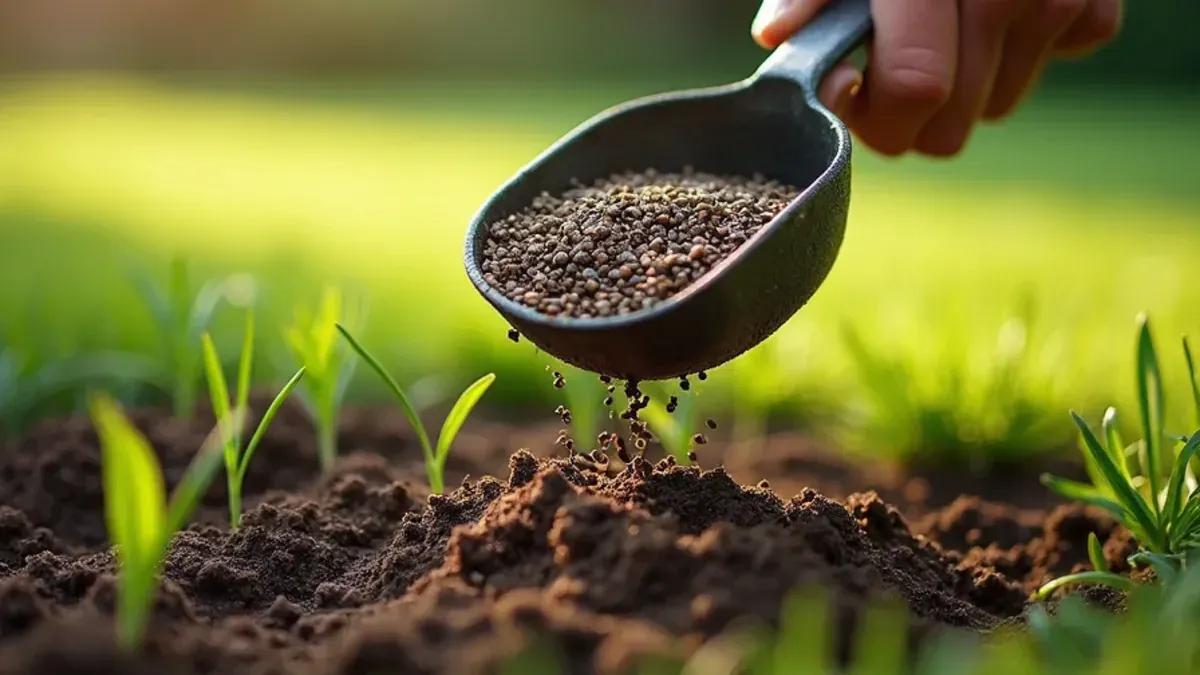
Overseeding an existing lawn takes roughly half the rate of a bare-soil seeding. These are the rates we plan around per 1,000 square feet:
- Tall fescue blends: 4–5 lb overseeding, 6–8 lb on bare soil
- Kentucky bluegrass: about 1 lb overseeding, 2–3 lb on bare soil
- Perennial ryegrass: 3–4 lb overseeding, 5–7 lb on bare soil
- Fine fescue shade mixes: 2–3 lb overseeding, 4–5 lb on bare soil
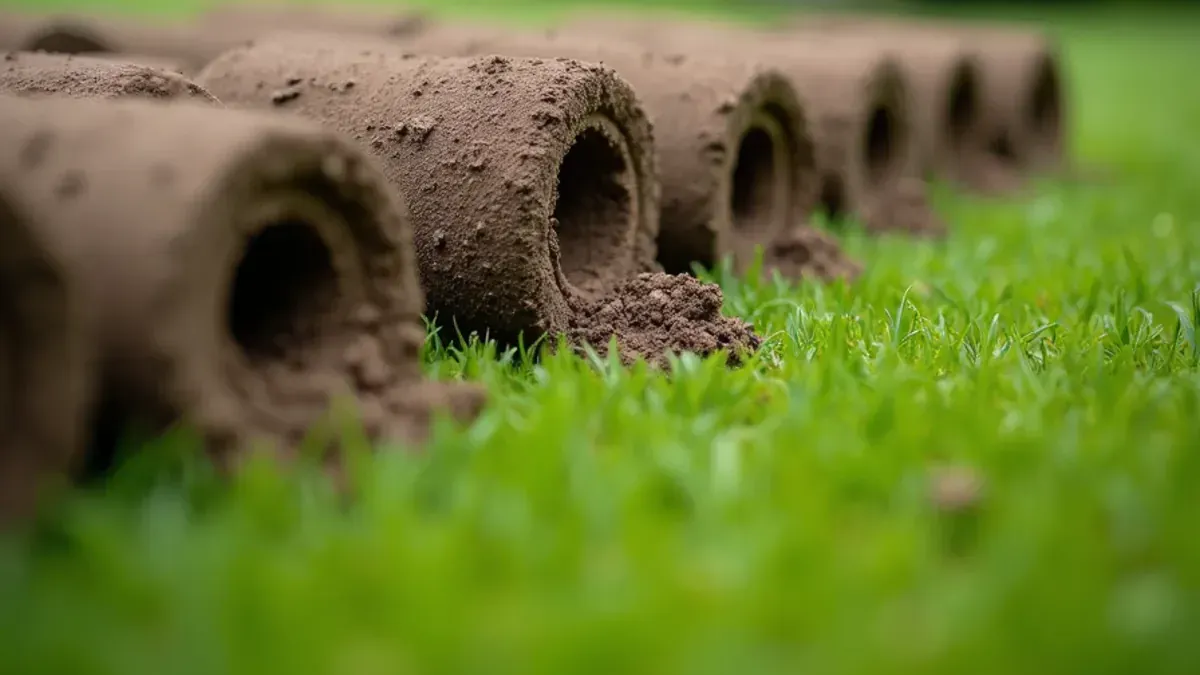
Seed that lands on thatch or hard clay mostly feeds birds. Seed-to-soil contact is the whole game, which is why we pair seeding with core aeration: the holes and broken-up plugs give seed a protected pocket of loose soil. Our core aeration and overseeding service runs the aerator in two directions before the seed goes down.
- Mow the existing lawn a notch lower than usual and bag the clippings once.
- Core aerate in two passes, then spread seed in two perpendicular passes.
- Apply a starter fertilizer at the label rate.
- Water lightly once or twice a day to keep the top inch moist until germination, then water deeper and less often.
- Hold off mowing until new grass reaches about 3½–4 inches, and skip broadleaf herbicide until the seedlings have been mowed three or four times.
What We See in Greenwood and Other Newer Subdivisions
Many newer neighborhoods on the south side, including much of lawn care in Greenwood, were built on graded clay subsoil with young trees and full sun. Those lots are made for tall fescue: it roots deeper into compacted clay than bluegrass does and handles the dry stretches in July and August without constant irrigation.
Older streets with big canopy trees are different: we often seed a fine fescue shade mix under the trees and a fescue-bluegrass blend in the open.
From our crew's experience
Where Seed Jobs Succeed or Fail on Indy Lawns
The blend matters less than most people expect. What decides an overseeding job is whether the seed touches soil and stays moist for three weeks. When a seeding fails on a Speedway lawn, the cause is almost always watering that stopped after the first week, seed spread over thatch, or a broadleaf weed killer applied shortly before the seed went down.
Choices we weigh on every job:
- Matching what is already there. Dropping coarse tall fescue into a fine bluegrass lawn leaves visible clumps. We identify the existing grass first and pick seed that blends in.
- Ryegrass as a shortcut. It comes up fast and looks finished in two weeks, which is why cheap mixes lean on it. On our clay and through our summers it thins out, so we keep it a small part of any blend.
- Patching versus overseeding. A few bare spots can be raked, seeded and topdressed by hand. Thin turf across the whole yard is an aeration job.
Hand-seeding small spots is easy DIY. Bring in help when the whole lawn is thin, when nobody can water daily for three weeks, or when the same area keeps failing year after year.
FAQ
Common Questions
Is tall fescue or Kentucky bluegrass better for an Indiana lawn?
For most sunny central Indiana yards on clay, turf-type tall fescue is the safer choice because its deep roots handle drought and compaction. Kentucky bluegrass gives a denser, finer lawn and repairs itself, but it needs more water and fertilizer. A tall fescue blend with 5–10% bluegrass gives you much of both.
Can I overseed in October in Indianapolis?
Early October can still work for tall fescue and ryegrass if the weather stays mild, but results drop quickly after that. Seedlings need several weeks of growth before the first hard freeze. Kentucky bluegrass is too slow to germinate for October seeding. If you miss the window, dormant seeding in late November is the better fallback.
How long does new grass seed take to come up?
Perennial ryegrass shows in about 5–10 days, tall fescue in 7–14 days, and Kentucky bluegrass in 14–30 days under good conditions. Cool nights, dry soil or seed sitting on thatch all slow it down. Keep the top inch of soil evenly moist the entire time; letting it dry out once can kill freshly sprouted seed.
The Bottom Line
The right seed, spread at the right rate in late summer and pressed into loosened soil, will out-perform an expensive bag thrown on a hard lawn every time. Match the species to your sun and traffic, read the tag, and give it steady moisture for three weeks.
If you would rather have it handled, Speedway Lawn Maintenance can walk your lawn, recommend a seed blend for each part of the yard and schedule aeration and overseeding inside the fall window. Call or text 1-323-606-0255 to get on the calendar.